There are many things to consider when thinking about changing careers. I wrote an entire book about it but today I want to talk about something not in the book: changing careers and the loss of apparent power that goes with it.
I am not talking about changing jobs as you approach the pinnacle of your career moving from one company to the next and staying in finance or marketing or whatever. I am not talking about changing specialities within your industry such as moving from thoracic to plastic surgery. I am talking about moving from the industry in which you’ve spent years, perhaps decades, building a career to an industry that is completely and radically different in which you have zero experience. For the sake of discussion, let’s say you’re a criminal defense lawyer, making great money, winning year after year, and then it hits you. Continuing with our story, you don’t love it anymore and you give up your thriving law practice and start a bean to bar chocolate factory with your life savings. It happens all the time; the CEO who becomes a motorcycle mechanic.
There are volumes of inspirational messages about giving it all up and changing careers after years of success (I define that term at length in the book but here’s a hint: it’s not money and a million followers on Instagram) so we can follow our dreams. None of them, however, talk about swallowing pride, starting over, and enduring relative humiliation.
When I was a hard charging lawyer people returned my calls and now, not so much. When I called courthouses, police departments, other lawyers or pretty much anywhere that my reputation preceded me I was transferred to whomever I was calling or they called me back pronto. That’s just one tiny example. When I was a lawyer winning cases and making lots of money people seemed to respect me, many might have admired my work, and some people were afraid of me. Even now, nearly twelve years in to my chocolate career I could call a buyer at fill in the blank store where we’d like to do business and I am chopped liver to be certain. Back in my other career I often got what I wanted.
During the time I was searching for a new career that inspired me I knew that I would be making less money, a lot less money in my new yet to be determined career. I didn’t really think that much about losing apparent power because nobody told me about that and I guess I was not smart enough to figure it out on my own. I knew the money part was something I could handle. It’s black and white budgeting, straightforward, a spreadsheet.
Feeling small and insignificant after years of feeling important is a winding road of emotion that never really ends. This is also called humility. It is not something we “do” actively but instead it happens to us whether we seek it or not. Most of the time I am grateful for this smallness, consider it a gift and make it a practice. I don’t have it all figured out by any stretch. But some days I see glimpses of my true self when I recognize that it’s in my smallness that I am most connected to humanity and able to see Divinity. There is dignity in smallness that I didn’t see years ago. I am not suggesting that smallness and humility always feel good but the discomfort is outweighed by truth and beauty that I probably missed in the old days.
I’m not sure where my chocolate business would be without a handful of mentors along the way who helped me avert danger and land safely time after time. Lately I’m thinking that having a mentor is not enough in business or life. Yes, we need mentors to help us navigate fill in the blank practical aspect of our business. But, maybe what we really need is one or more elders deeply rooted in our lives, and us in theirs, over a span of years.
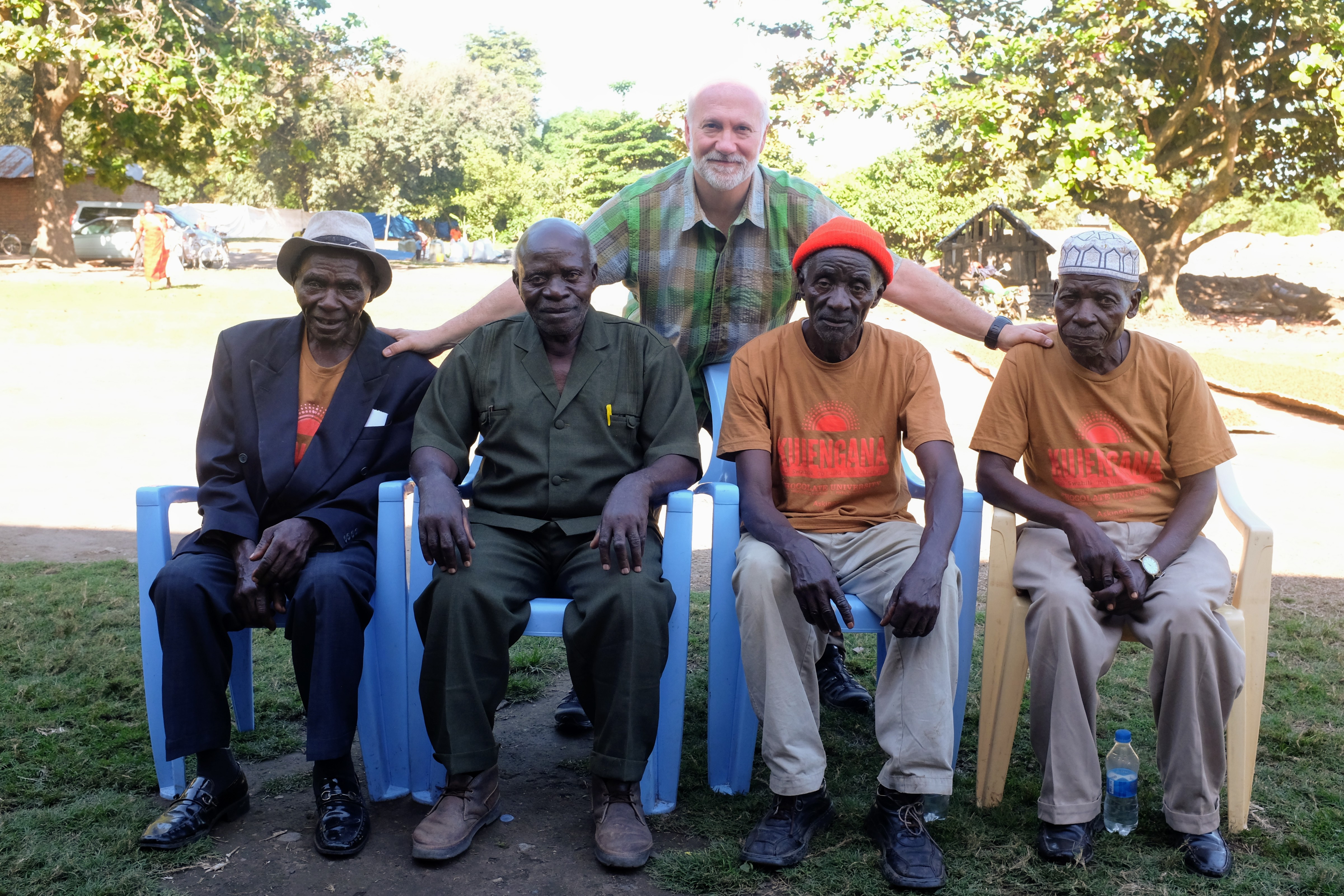
What initiated my thinking on this are the elder farmers I’ve seen in rural Tanzania over the past decade, how they interact with others in the village, in cocoa cooperative meetings, and in family settings. Want to understand village mindedness? Watch the elders. During cocoa cooperative meetings the elders sit up front. They often speak first in meetings. When we have chocolate tastings they are first to taste. This is true for both men and women elders. I see younger farmers act with gentleness and patience toward elders who, at first glance, might not appear as “contributing” to the group. I’ve noticed the real “contribution” is not from these elders who have trouble walking, talking or even thinking clearly but it is the way in which younger members of the group behave toward these people who were once vibrant and now need them. In other words, this is an opportunity for the younger ones to exercise compassion and give dignity to those who need it.
From the right, Tanzanian cocoa farmer elders Anderson Mwaliambwile, Ambikile Mwandalima, me, Rainald Mwakimbwala
Let’s swing the bus back around and point the discussion toward my hometown and yours.
What is an elder? An elder is not achieved by merely being old. It is an earned status that begins with many years in the rear view mirror. An elder has garnered wisdom and humility along the way. This is also true in Tanzania where age alone does not bestow the qualities that make other members sit up and take notice when they speak. Age alone does not an elder make. An elder is someone who’s been through some stuff, lots of stuff, and yet they still stand. They don’t hide their scars and even celebrate imperfection. An elder is not necessarily someone who achieved great notoriety in the community but perhaps notoriety on your street. An elder’s smile is creased with practice and their words are measured and kind. Even though they sometimes cannot see or hear perfectly you are drawn to them, you want to be close to them.
Why might you need an elder in your life? A mentor can tell you if you should expand your facility location or where to find a better deal on credit card merchant rates or if you should pay for business interruption insurance. An elder can tell you what it’s like when you might not have the money to meet payroll, what it’s like to grieve the death of a spouse or child, what loneliness feels like, or why walking everyday is important. They’ve struggled through darkness, been to the mountaintop, returned and want to tell you about it. Over time an elder will get to know you and feel free to speak with a directness that might feel unfamiliar. You will come to appreciate it even though it might be uncomfortable at first. You will also discover how open hearted you are in conversation with this person because guess what? They don’t care how many likes your last picture got on Instagram. They help us understand that embracing mystery, not pushing it away, is critical over the long haul of finding joy in our lives. We need elders in order to gain their wisdom, learn how to soften our edges and put life into perspective.
We also need relationships with elders so we can serve them when they need us even for the little things. A time will come when we can give something back to them as they start to see home a little more clearly ahead in the front windshield. This is mutuality.
Where are you going to find such a person? They’re all around you in churches, temples, fitness centers walking around the track, neighbors. Some you might know well enough to call and ask if you can meet for a cup of coffee. I promise if you look you will find one or more elders who will be more than happy to take you under their wing. If your standard is Gandalf or Mother Teresa then you’ve missed the point. Make it your intention, your prayer that elders cross your path that you can talk to, learn from, and someday serve. I am certain it will happen. If all else fails, ask your mentor if he/she can introduce you.
You can read more about how elders have influenced my life in my new book Meaningful Work.
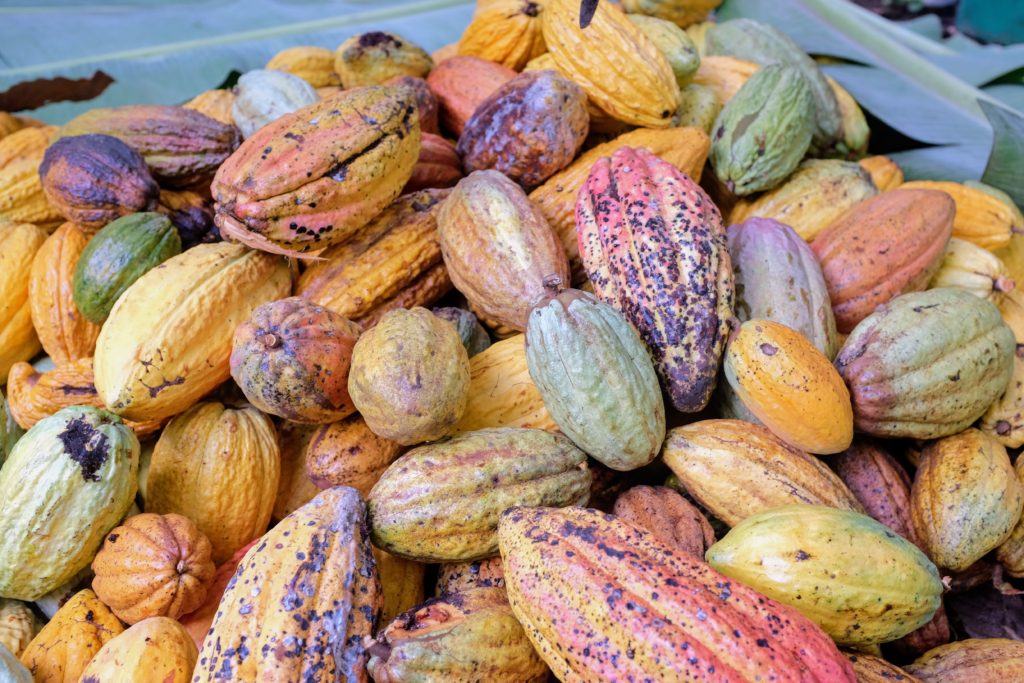
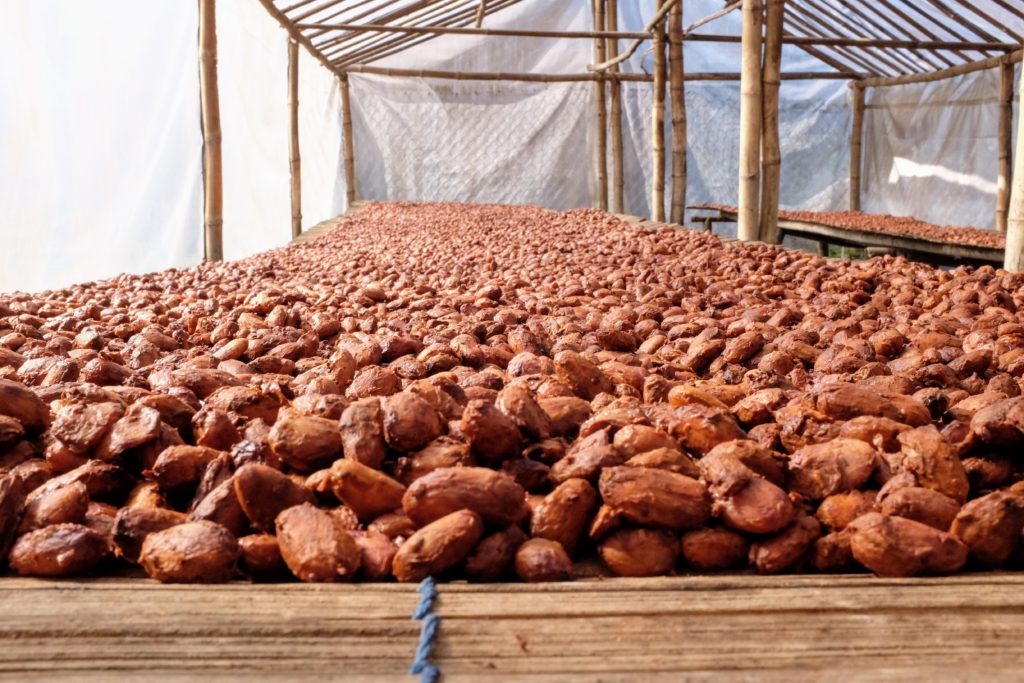
The market price of cocoa beans has remained unchanged in the last 30 years when adjusted for inflation.(1) Wait. What? Read that sentence again. And to make matters worse the world market price these days is dramatically low. As low as I have seen it in years. That’s great news for Big Cocoa (the 8 or so companies the buy the majority of cocoa in the world). But the low price of that cocoa bean–and consequently the chocolate–is on the backs of struggling cocoa farmers who are living on less than $2 per day. It’s akin to modern day slavery, a sort of neo-slavery, but sophisticated because of obtuse supply chains. In other words, Big Cocoa has plausible deniability.
In recent years Big Cocoa has implemented many social programs from schools to clinics to improved farm yields to reforestation initiatives. This is not “social washing,” because these projects are probably real. They have long names that usually end in a year; something like “Sustainable Cocoa 2030.” There are so many projects and initiatives for this, that, and the other that it’s impossible to keep track. I read about them every day in industry newsletters. That means the PR firms for Big Cocoa are cranking out press releases announcing Big Cocoa to the rescue. Then come the cool PowerPoints. In reality, X program might make a terrible life a little more bearable, slightly more human. But it’s as if these projects and programs are designed to keep us from remembering that many cocoa farmers are living a subhuman existence. To be clear, I am speaking mostly of the farmers in West Africa. The farmers are beholden to Big Cocoa, with no choices, no power, no voice. Big Cocoa indirectly controls the market price. The farmers were already in the depths of poverty which is only made worse by the terribly low world market price of cocoa this year.
It’s a worthwhile endeavor to look at the simple math supporting this proposition that these farmers are unbearably poor. The World Cocoa Foundation states that the average cocoa farmer has between two and four hectares (five to ten acres), yielding between 300 and 400 kg per hectare in Africa. Here is the breakdown: assume our West African farmer has 3.5 hectares (conservatively) and that his yield is 450 kg per hectare. That means the farmer has 1,575 kg yield on his farm. The world market commodity price has been hovering around $2 per kg. This means that the total yield on the farm of 1,575 kg (if the farmer’s buyer received the world market price) multiplied by $2 would equal $3,170. But, our farmer (in the case of Ghana) will only receive 70% (or less) of the world market price. The other money (30% or more) is siphoned off in a highly complex government controlled buying system. This reduces our farmer’s income on these cocoa beans to $2,205 annually. When we divide that number by 365 days in the year, that puts him or her at $6.04 per day. The way we look at these numbers, however, is by dividing yet again by the average number in the household. In this case it’s 6, so our farmer and family are living, somehow, on $1 per day. The United Nations defines “extreme poverty” as less than $1.25 per day and “poverty” is below $1.90 per day. If the world market price was at $3 per kg as it was 12 months ago, then our farmer’s per capita income would be $1.51 per day assuming the other variables as true in my example. You see where I am headed with this?
Message to Big Cocoa: you really want to help cocoa farmers? Four words. Pay. Them. More. Money. And make sure it gets to the actual farmers. “Not that simple,” you say. The truth is that it is. “We would sacrifice too much profitability,” you say. Not likely. All of us in the industry understand the other variable costs and the effect higher prices paid to farmers will have on margin. I understand that it’s in your financial interest and thus your duty to shareholders to not only control the price of cocoa but keep it low (but not so low that it threatens your supply). If consumers are eating a cheap chocolate bar there’s probably a reason it’s so cheap and it’s not because the manufacturer is the most efficient company in the world. Big Cocoa has the power to give freedom to many cocoa farmers by simply paying them more money.
You might be thinking, “Why would Shawn care since they don’t buy beans from West Africa?” Over the last eleven years, we’ve paid our farmers, on average 48% more than they would have otherwise received at their farm gate and we’ve documented it here for our customers to read and review. Why? Well, we do it for our customers and to hold ourselves accountable. We want to constantly assess how we can do better. Our system of profit sharing and opening our books to the farmers in their native language is good but it’s not perfect. The system of cocoa bean buying in Ghana is so complicated that I gave up after two years of really trying to deep dive into the intricacies and crack the code. I don’t quit easily but it was just too byzantine and government controlled in Ghana to fit our model of direct trade. But, we at Askinosie Chocolate, should not let ourselves off so easily. We are part of the larger world of chocolate, even of chocolate made from beans on the backs of struggling farmers we’ve never met in West Africa. Joseph Campbell says we are called to, “participate joyfully in the sorrows of the world.” What’s “the world”? Well, that depends. Right now, to me, it means the world of cocoa beans. I often talk and write about the juxtaposition of sorrow and joy and the mysteries of both. I am at a loss though to find joy in this story. A story in which I see nothing but pain, powerlessness, silence, hunger.
I suppose then I am called to create the joy in this saga. I can think of two things that will help. First, please consider buying good chocolate this Valentine’s Day for the ones you love. Might I suggest some others than us, such as Dandelion Chocolate, French Broad Chocolates, or Harper Macaw to name a few? I am certain you will not be disappointed. There are many more. I ask that you search us out, try us and engage with us to change the channel on Big Cocoa. Second, I am not suggesting that you never buy another Snickers Bar but I am hoping that you will look into the issues I raise here and perhaps apply your mindfulness muscle to ask yourself if it is a good or bad idea to support Big Cocoa with your hard-earned money.
Footnotes
1. The commodity price of one metric ton of cocoa beans in 1985 was $2,342.19. In today’s dollars that would be $5,187.56, according to the Bureau of Labor Statistics CPI Inflation Calculator. The price today for one metric ton is roughly $2,000.