The U.S. Supreme Court decided today that 6 former child slaves who were kidnapped at a bus station in Mali, driven across the border to the Ivory Coast, then sold to farmers for $40 apiece to harvest cocoa beans had no grounds to bring a lawsuit against Nestle for human rights violations. The claim was that Nestle and others “aided and abetted” these human rights violations by buying these beans that they knew were low cost and tainted by enslaved children.
The U.S. Department of Labor estimates that there are 1.58 million children working harvesting cocoa beans in Ghana and Ivory Coast where Nestle, Cargill, Hershey, Mars, Barry Callebaut and others get most of their beans. They estimate that 48% of them are performing “hazardous labor.” Rest assured that this is not your grandparents family farm situation when you might have helped them bail hay, break ice, or deliver a calf. This is brutal, inhumane and sad.
The children in today’s case were tortured and treated like animals. Let’s look directly at the brief they filed in the Supreme Court:
Respondents are six former child slaves who were trafficked from Mali and subsequently held for years in slavery on Ivorian cocoa plantations. Between the ages of twelve and fourteen Respondents were forced to work on Ivorian cocoa farms for twelve to fourteen hours per day, at least six days per week. They were not paid and were given only scraps of food to eat. Respondents were beaten with whips and tree branches when their overseers felt that they were not working quickly enough. They were forced to sleep on dirt floors in small, locked shacks with other children, and were guarded by men with guns to prevent them from escaping. Respondents witnessed other children who tried to flee the plantations being severely beaten and 4 tortured. One Respondent, John Doe IV, tried to escape, and when the overseers caught him, they cut the bottoms of his feet and rubbed chili pepper into his wounds. He was also tied to a tree and beaten until his arm was permanently damaged. John Doe III witnessed small children who tried to escape being forced to drink urine. John Doe VI was severely beaten for working too slowly when he was sick and, like the other Respondents, his arms bear multiple scars from machete cuts he incurred while being forced to use the sharp tool to cut down and open cocoa pods.
I’d like you to read that paragraph again and let it sink in. Nestle responded to this lawsuit when it was filed in 2005 and have been blocking these children from their day in court for 16 years. They won today. This means that their human rights lawyer – Terry Collingsworth – has not been able to present any evidence, no jury, no discovery, no chance for the children to be heard. Terry founded and runs the non-profit law firm International Rights Advocates fighting the fight against these abuses. It is David v Goliath IRL. Terry is a hero and selfless advocate who is not letting this ruling slow down his work on behalf of his clients.
The sad headline is this: the highest court in our land said that cheap chocolate made on the backs of child slaves will remain cheap for now. I say “for now” because the complicated and divided opinion left the door open a tiny crack that the plaintiff children can amend their charges in the U.S. District Court in California and maybe just maybe have a cause of action that will pass Supreme Court muster. It’s not over.
Why did the Supremes reverse this case and hand Nestle a temporary child slave permit? This gets complicated even for me and I spent nearly 20 years in the courtroom and getting ready for trials as a criminal defense lawyer. I spent a short lifetime reading Supreme Court cases and doing my best to interpret their meaning and impact. Justice Thomas said that the former child slaves did not adequately allege that Nestle’s conduct was inside the United States. Speaking for the Court he also said (and here’s where it might be argued otherwise) that there is not a cause of action at all under the Alien Tort Statute which is the anchor for these plaintiffs. The New York Times, less biased than me, did a nice job of explaining it. For a deeper dive check out this well respected blog on all things Supreme Court.
What do we have to do with this you ask? You might recall from other posts that Askinosie Chocolate, along with 17 other small chocolate companies, filed an Amicus Brief in the Supreme Court last year supporting the rights of these child slaves to have their day in court. Our lawyers at Corporate Accountability Lab argued that there are other ways to make chocolate without using slaves. The best background primer on this litigation and the issue itself is this article by journalist Simran Sethi in The Counter from last week. Chocolate industry expert Clay Gordon interviewed me last week, before the case was decided, but it’s a good conversation if you’re interested in checking it out. We’ve been on this issue for years and will continue to advocate for children and tell our story. I wrote an extensive post when the Washington Post broke the story 2 years ago about the pervasive problem in the chocolate industry.
What’s next? Another lawsuit was filed this past February in federal court on behalf of other former slaves under a different statute. I think this has a great chance of success. There is another case pending in front of the Customs and Border Protection agency asking that they not allow cocoa beans in this country that have been harvested by child slaves. Stay tuned. In the meantime, we will keep working with farmers directly, profit sharing, paying way above farmgate price and engaging in their communities. They are our friends.
My call to action: please consider donating to the International Rights Advocates, a 501(c)(3) human rights law firm run by Terry Collingsworth so they can keep fighting this important fight. And for those of you who know me, I am not letting this go and will do everything I possibly can in my chocolate making lawyer powers to help Terry stop Big Chocolate from using enslaved children. And of course when it comes to our chocolate, we’ll keep living what you’ve come to expect from us because remember, it’s not about the chocolate, it’s about the chocolate.
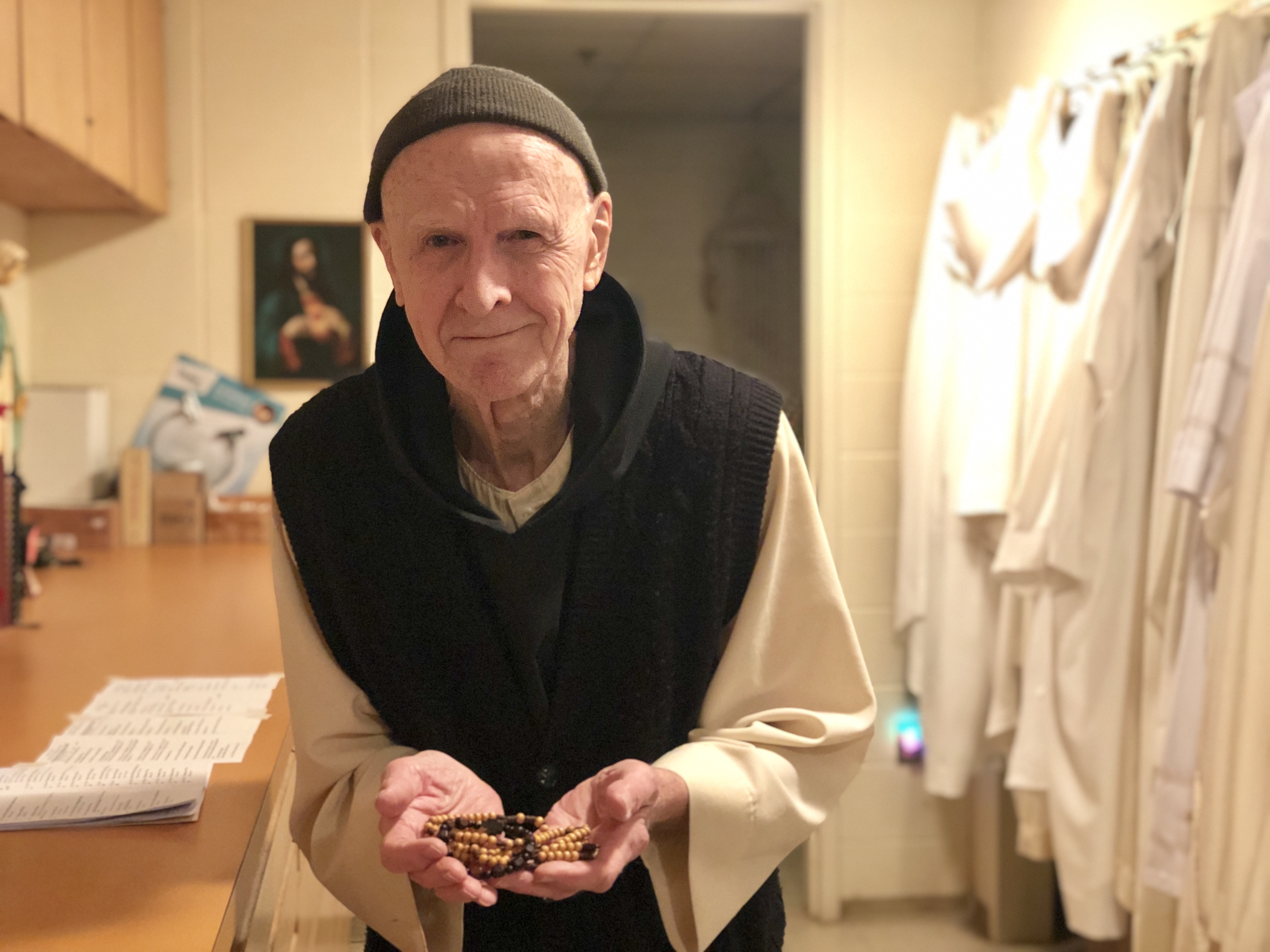
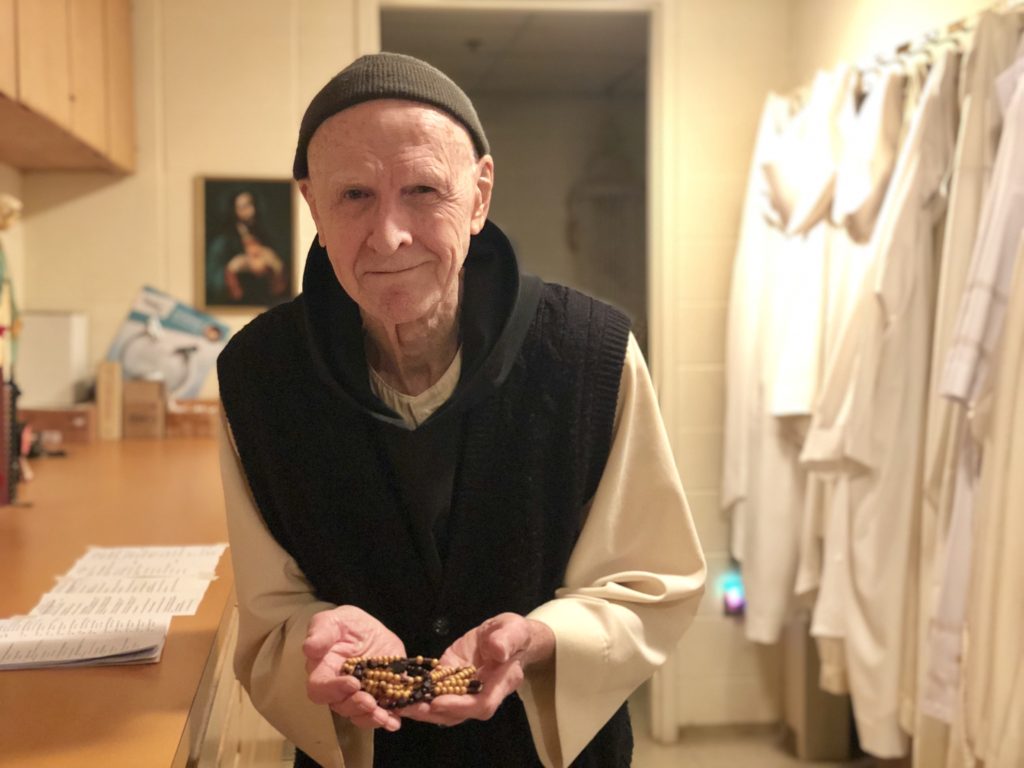
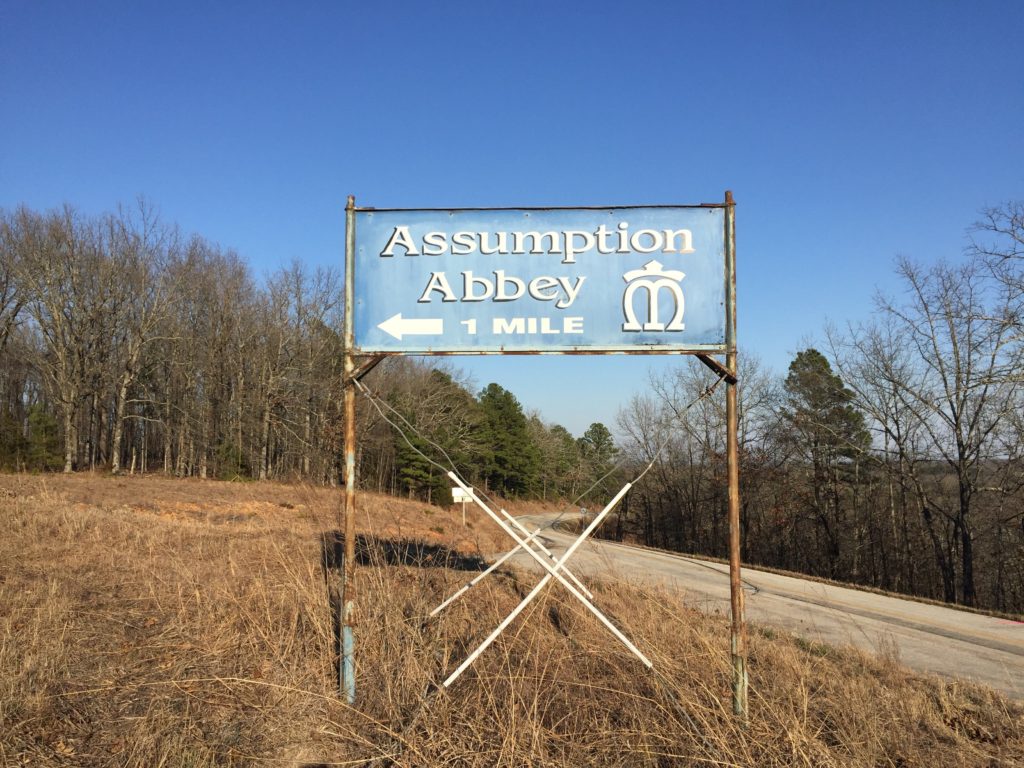
Just kidding. I am not sure Father Cyprian has ever walked into a bar; not that he wouldn’t but I don’t think he has. I’ve been walking the country roads near Assumption Abby, in the Mark Twain National Forrest, with him for over twenty years. This Trappist Monk has been my spiritual director all that time. I was telling my therapist this week, yes I have one of those too, that I’ve journaled every visit to the abbey from lawyer to chocolate maker and everything in between. And the funny (not funny) thing is that when I reviewed old entries from long ago I see where not much has changed in my struggles. But then if I really look I also notice tiny little insights that have evolved into change. Cyprian entered New Melleray Abbey in Iowa in 1950 and was among the first monks to establish monastic life at Assumption Abbey near Ava, Missouri where they now make famous fruitcakes to support their way of life. Part of this conversation I had with Father Cyprian originally appeared in The New Territory magazine’s “Shop Talk” series this past summer. I’ve been in the company of many people around the world in my life but I am hard pressed to name another person in whose presence I’ve felt more wisdom, peace, and grace than Father Cyprian. I have made a lifetime vow to the abbey as a family brother, will one day be buried there, and look forward to the day when I can visit again and become part of the rhythm of community life in solitude.
Father Cyprian: Hello, this is Father Cyprian.
Shawn Askinosie: Father Cyprian, it’s Shawn.
FC: Good morning.
SA: Good morning. Is this still an okay time?
FC: Yeah, it is. It’s fine. We have a nice, drizzly day here.
SA: Yes. In fact, it’s kind of stormy here.
SA: Can you describe for someone who’s never been to Assumption Abbey, the place where you live?
FC: Well, we’re in a very scenic location, hills and hollers, wooded. And for people who are used to solitude or who’ve grown up in the country, they feel at home. For people who are mostly living in cities and the hustle and bustle of the fast life, it can be kind of spooky for a while until they get used to it.
SA: Why do you think that is?
FC: Well, people are different. People have different gifts of nature and grace. And partly, there’s a difference between solitude and loneliness. Solitude can be alone with God, and loneliness can be stuck alone with ourselves without God. All of that would go into the mix of a person’s first reactions and then gradually seeing if they really are at peace or at home at such a location.
SA: What a perfect time to be talking about solitude in the middle of this pandemic because people have been basically put in mandatory solitude.
FC: Right—
SA: … or loneliness whether they like it or not. Would you have any advice for someone who might be struggling with how to accept solitude as a grace? Any suggestions?
FC: Well, I think that you put it right that if we can see a forced solitude as a grace, a gift, and then it can become fruitful. But if it’s something imposed on us that we don’t want to do or don’t want to accept or don’t try to accept, it can be harmful.
SA: Well, speaking of solitude… And I’ve never asked you this before. I’ve asked you a lot of questions in 20 years. And I’ve been thinking about it, it’s been just slightly over 20 years that we’ve been walking around the grounds of the Mark Twain National Forest together. But I haven’t ever asked you, if you could take only one book into solitude if you were going on a really long retreat or to a hermitage (and that book, let’s say for the sake of our discussion is not the Bible or not the Breviary) what do you think that book would be?
FC: Well, you took the book away from me by saying not the scriptures. But I would take a book by Dom Columba Marmion. It’s called Christ in His Mysteries.
SA: Is that a new book or an old book?
FC: No, it’s kind of a golden oldie. It follows God’s plan of creation, salvation according to the liturgical year. It’s geared towards a personal relationship with Christ and union with God.
SA: In living this life, I’m sure that you’ve learned over the years how to live in community with family, with your brothers as friends and family and all of it. So could you maybe say something that you’ve learned, or one or two things that you’ve learned, from when you were 20 to now that as you reflect back, that maybe this is what you’ve learned about how to live in community and how to do that and have stability in this community? What do you think?
FC: Well, we learn early on that we are all essentially in the same boat. We’re all fallen children of Adam and Eve. And the paradox is that we’re also filled with the Spirit of Christ, the Holy Spirit. So there’s that strange combination, paradox of strengths and weaknesses of goodness and woundedness. It gives a trust and it also requires a real trust in God’s presence and work in our community life. Also if you come to appreciate that with all the differences and challenges or whatnot, it is a real blessing to living within a community where there’s this constant current of life, of value, of essential unity that keeps pulling you in the right direction.
SA: Which direction would that be then?
FC: Well, I look on life as a journey of return to the Father, which is pretty much the way our Lord expressed his own life direction. He had that sense that He came forth from the Father into the world. So He was passing through the world on a journey of return to the Father. So that sense that we do come from God’s creating hand and we’re on this life journey.
SA: One of the things that I wanted to talk about in our remaining time is this notion of the Paschal mystery. And I remember when we first started talking, and you started spiritually directing me informally 20 years ago. And I was really struggling then with some health issues and depression, and you introduced me to this concept of the Paschal mystery. And I really, over the last 20 years, deepened my appreciation of that idea, that notion of that doctrine and its application to life. Can you explain a little bit about what the Paschal mystery is and why, in your opinion, it seemed to really resonate with me and perhaps other lay people that you’ve talked to over the years who might be struggling? Why does there seem to be such beauty in this idea of the Paschal mystery?
FC: Well, given the way you presented why does it connect or resonate with our human life, one way would be to say that it’s the way our Lord Jesus dealt with suffering. And that’s such a reality in every human life and greater or lesser, different forms. And there is always that challenge and mystery of suffering, and this is the way He dealt with it in His human life as a Son of Man, Son of God. So it’s He accepted it again to the shadow side of suffering, and He accepted it as part of God the Father, Creator’s plan and way of creation, salvation. He gave it value by seeing it or offering it as a reparation for sin, to make amends for the offenses against the Divine Majesty as a way of showing us, children of Adam of Eve and then adopted children of God, how we can find value and cope with suffering. It’s in identifying, in our own small way, with His own suffering and death, passion of His redeeming sacrifice.
FC: And then also identifying with His resurrection, the glory, the victory, which He brought out of His way of dealing with suffering and death. So that gives us that value of walking through the shadow side, the valley of shadow of death, and then entering also into the glory side, the fruit, the victory of good over evil. As I once said, we don’t fear those reasons that would kill the body but we live in the reverence of God who can bring eternal life out of suffering and death.
SA: Well, it sounds like it applies to the scripture reading I just mentioned for today, Jesus said, “So now you’re in anguish, but I’ll see you and your hearts will rejoice. And nobody will be able to take away that joy.” That’s kind of what we’re talking about, isn’t it?
FC: Right. And then He used such ingenuity in His parables that He used a woman, a mother and her childbirth experience, that fits so perfectly.
SA: We kind of skipped over… or I did by asking you about the Paschal mystery, so in a sentence, what is the Paschal mystery and why that word? What does it mean? What is that?
FC: It would be our Lord Jesus’ passion and death, and His resurrection and ascension and sending the Holy Spirit as the fruit of His own passion and death, resurrection. So it’s sharing that with us through His indwelling Holy Spirit.
SA: A person could literally spend a lifetime meditating, praying, reading, lectio divina about this Paschal mystery.
FC: Yeah. The thing is, that’s what I meant about the growing interest and lectio divina of scripture, it’s not a head trip. It’s something that we live out in real life, daily.
SA: Whenever I talk to see you and I say, “How’s it going?” You routinely say, “I’m flourishing.” I wrote about this in Meaningful Work. What do you mean by that?
FC: That in a sense I took that risk of jumping off the end of the world, seeking the gift of the obedience of faith.
SA: And that’s what you mean by flourishing?
FC: Yeah. There is a gift of faith God gives, a deep inner conviction that this is true and right. Jesus Christ’s way is the right way. He is true. And you take the risk of, again, living it out. And then more and more, over the long run, there’s fruit. You see, it works. It’s real.
FC: So as I get older, I moderate that flourishing. I say, “I’m relatively flourishing.”
SA: As you return home on that journey, I understand.
FC: Okay, right on.
SA: There are some days where I can say I’m flourishing, but there are also other days that I don’t feel like that. You’ve been walking that walk with me, and I was thinking last night that I’ve talked with you about every major decision that I’ve made in my life in the last 20 years. That spiritual direction has been one of the great constants in my life. And so I’m thinking when you do return home and I’m here, and I can’t talk to you like I’m talking to you now, what am I going to do?
FC: God will provide. It isn’t a person that’s kind of a super guru. It’s when we seek spiritual direction from another, we’re really going in the light of faith. We’re talking and seeking God’s will in a person who, in a very real way, represents Christ. Well, that’s part of the mystery and the wonder of the incarnation, that God comes to us through our human nature.
SA: Okay. I will believe that. Well, those were the questions that I wanted to ask. I guess I didn’t ask all of the questions that I said that I was going to, but these are great. And so I will keep you posted on this and-
FC: There’s one more thing that gave me pause to think about in those questions originally. I don’t know whether you want to include it in the article or not but-
SA: Yes, yes, go ahead.
FC: … we’ll talk later about it and you can decide. You said, “What about contemplation?” And I remembered an answer that I was a young monk, my father master or the spiritual director at the time, he was very interested in contemplative prayer. And so at one point he asked me, “Keep some notes of your prayer, let’s say for the next week. And I’ll go over them.” So he did, he read what I had written down. He read it and he kind of shook his head, and he says, “Well now, you don’t have the gift. You’re not the type.” Not in that sense experiencing an approach to prayer which is a contemplative prayer, my own way approach is in terms of contemplative life, seeing every person, everything that happens in the light of faith. And seeing God’s hand at work in the events in people’s lives, short term, long term.
FC: And then as I get older, I become more limited in what I can do and all that. And so exploring it, I read not too long ago about a professional ball player. He’d been in the minor leagues, did really fine, so they sent him up to the majors. After a year or two, it really wasn’t working out. So they said to him, “Well, now what are you going to do?” He says, “Well, I’ll just go back and keep playing. I love the game.” And I thought, well, that fits me nicely. Only for us of course, the game is not something, it’s someone.
That’s all I had on my mind.
SA: No, that’s good. I love that. Thank you Father Cyprian. I really, really appreciate it. And thanks so much for being willing to do this, and thank you for being in my life. And I hope that you’ve been able to have the person in your life when you were “growing up” spiritually that helped you the way you’ve helped me.
FC: Yeah. Actually this very long struggle of gaining the goal of the faith, the gift of obedience of faith, and then the challenges in growing through the years. There’s been a few priests, monks who have served very much that role for me. And God will provide because He’s got the right person at the right time for what you want to do and accomplish.
SA: Yeah, maybe I can help be that person for someone, too. Maybe-
FC: I believe very much in Lost & Found and Chocolate University and also in your family, especially first of all in your family. Oh, say, also —
SA: Yes-
FC: Don’t send me any of this. I don’t need to read it.
SA: Oh, I thought you were going to say, “Don’t send me the chocolate-covered cherries.” And I was going to say, “Too late, I’ve already done that.”
FC: Don’t forget that.
SA: Yeah. No, I did it. I did it the next day after we spoke. I sent it, so you should be receiving that shortly, and please tell me what you think.
FC: Okay, will do.
SA: All right. Thank you so much, Father Cyprian. God be with you.