The Rule of Benedict has governed life and business in Catholic monasteries and convents around the world for over 1500 years. In order to become a monk or nun you must take a vow, called a solemn vow, after a three year trial period of discernment. This “practice” is both for the community and the prospective monk to prayerfully determine if indeed this vow is the right thing to do. The commitments made in front of the community and God are “stability, fidelity to the monastic life, and obedience.” As sacred as a wedding vow. I want to talk about the vow of stability.
Stability is a cornerstone of the Rule of Benedict. Some say that the Rule is the oldest management document in continual use. The pledge of stability is one of place. That a monk or nun will seek the monastic life in this place, in this community. Or as my copy of The Benedictine Handbook says, “This promise is very different from the lifestyle of a wandering monk of Benedict’s day.” There is no question that this promise of stability has anchored the faithful that brings us such joys as Trappist beer, cheese, and fruitcakes. What application might this promise have for us?
While I still suffer from The Shiny Object Syndrome, I am better, not cured. Years in the trenches have both worn me down and given me perspective that I did not have in my 20s or 30s. Not that there really is a cure, it’s more symptom management and discipline than anything else. Guess I should explain a little bit about what it is. It could also be called the “follow your dreams” syndrome. It’s a person’s inability to focus when distracted by the shiny object in his or her peripheral vision. Over time this shiny object can become so luminous that it more than distracts but dominates our thoughts and daydreams. For entrepreneurs this can be devastating if not kept in check. What about Elon Musk and Steve Jobs you say? Well, for every one of them there are thousands of men and women whose businesses succumbed because they could not stay focused on the road ahead.
Fueled by the internet and social media this malady, by the way, is not only found in entrepreneurs but in all of humanity. We are surrounded by shiny objects on our screens. All. Day. Long. I see on Instagram that my friend opened a snow cone stand in Costa Rica. I could do that! Two or three hours later I emerge from day drinking Instagram, Facebook, Pinterest looking for something better than my life now, convinced I will find it in Costa Rica. The problem is not that we’re unsettled seeking a better life for ourselves but that the shiny lure is tempting us now more than ever. And it repeatedly brings us back for more hitting the same reward centers in our brain as crack cocaine. “That other thing has got to be better than this” overwhelms us in a way now that was never possible before. What’s the answer?!
Timeout. Wait. What? I am the poster child for leaving a successful career and starting a new thing. Talk about a shiny object! While it’s true I’ve written a book, with my daughter Lawren, which centers on finding your vocation in business I also talk about STAYING WHERE YOU ARE. I realize that I didn’t stay put but we write at length about that thought process and what it looks like to find your vocation right where you are. Now more than ever — staying where you are — your house, your car, your job, your city, your school, your spouse — takes courage! The chains that once held us to these things (another story) are no longer binding us. It’s easy to leave. Too easy.
I am not suggesting we all become monks and nuns. However, looking at this ancient idea of a “solemn vow of stability” is worthy of our consideration. My grandparents continue as my example on this point. They were married and lived on the same farm here in Southwest Missouri for nearly 65 years. They did not live an easy life but one steeped in stability. Of course things went wrong with the crops, the cows, the chickens, the garden but their lives were deeply rooted in their faith, in each other, in their work, and in their neighbors. Stability gave them peace when the world swirled around them. That’s what it can do for me and you.
The monk’s vow of stability means that they don’t just pick up and move to another monastery when things get tough. I know a monk who is in the process of moving after over 50 years at Assumption Abbey. He’s talked to the Abbot about this for a year or so, prayerfully considered it, and will have a one year trial period at another abbey. This decision is not taken lightly but with great discernment. I am a Family Brother at Assumption Abbey and the the complete process is six years long. I am about four years into my “promise” based on my Rule of Life (loosely based on the Rule of Benedict) and in two years I will take a final vow of sorts, a lifetime commitment to this Abbey. The brothers, the liturgy, the balance of work and prayer help keep me grounded. Like I said, I still suffer from the lure of the shiny objects but I am working on it.
If you see yourself in any of this then I recommend finding your own heroes of stability and talk to them. Ask questions and listen. Seek their wisdom as the elders they are. They can help keep you grounded, in check, and at peace. I hope you can talk to them face to face in person and develop a relationship that spans the years. This human connection might one day enable you to be the teacher when someone much younger than yourself seeks your wise counsel.
Read my book, Meaningful Work: A Quest To Do Great Business, Find Your Calling, and Feed Your Soul, co-written with my daughter Lawren to learn more about this topic and others. The book will be out November 14th and is available for pre-order now (just click the book cover to the right).
My Grandparents, in their mid-80s, holding my daughter (and future co-author) Lawren in the den on their farm
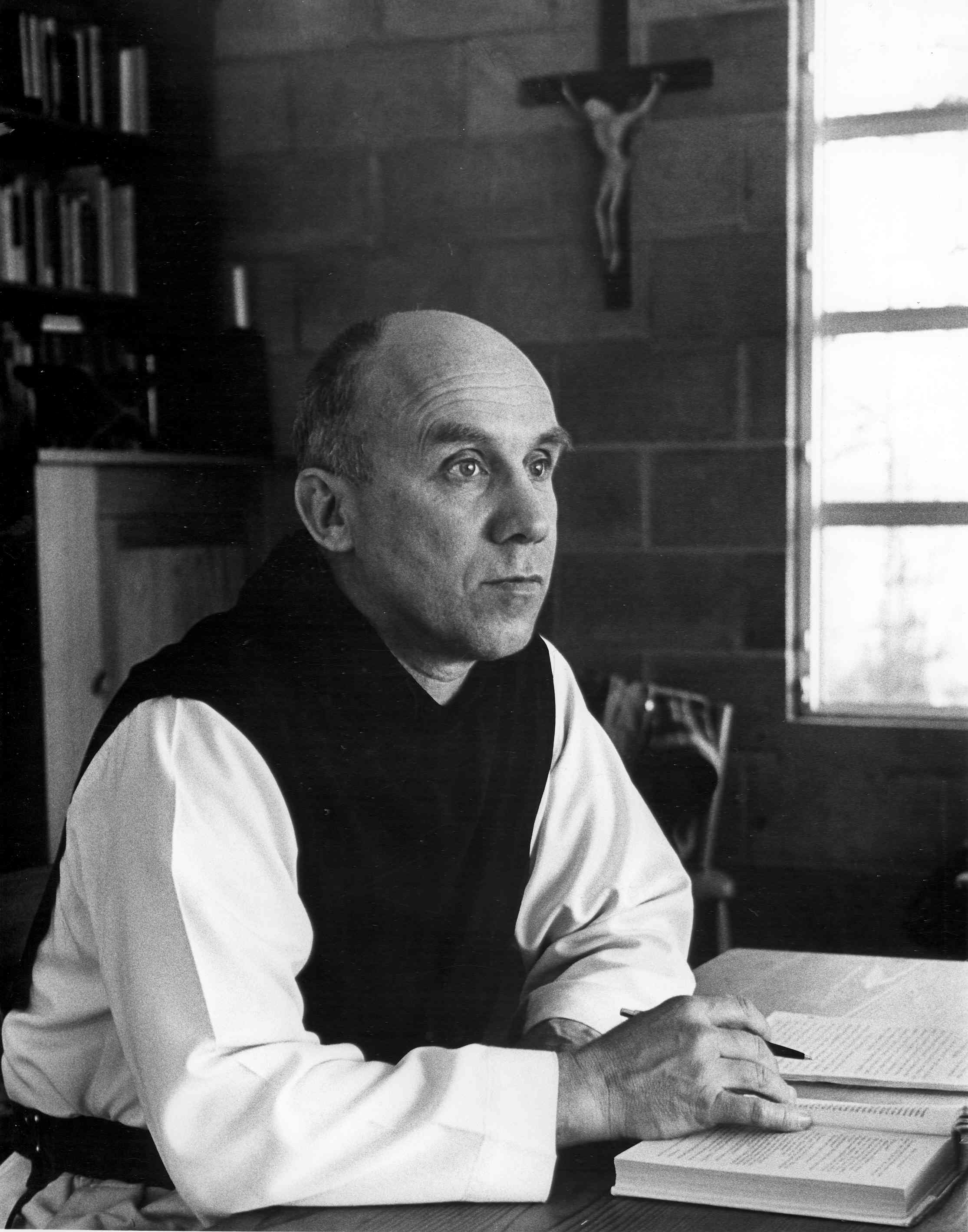
Thomas Merton, in Seven Story Mountain, recounts a conversation with his best friend Robert Lax one evening while they’re kicking around 6th Ave in New York City in which he asked Merton what he wanted to be. Merton, after stumbling on the question, says “I don’t know; I guess what I want is to be a good Catholic.” From the book:
“What you should say”— he told me—”what you should say is that you want to be a saint.” . . . I said: “How do you expect me to become a saint?” “By wanting to,” said Lax, simply. “I can’t be a saint,” I said. . . . But Lax said: “No. All that is necessary to be a saint is to want to be one. Don’t you believe that God will make you what He created you to be, if you will consent to let Him do it? All you have to do is desire it.” A long time ago, St. Thomas Aquinas had said the same thing— and it is something that is obvious to everybody who ever understood the Gospels. After Lax was gone, I thought about it, and it became obvious to me.
It takes 2 things: desire and consent.
This notion of everyday sainthood is close to my heart because it was the central theme in the eulogy message I gave a few weeks ago for a father figure, friend and mentor in my life who died recently. I was honored, deeply touched when his family asked me to do this. He was 82 and to me he is a saint. Not was but is.
The story goes something like this . . . Not long after my dad’s death he invited me over to play music with his family. I was a teenager with nowhere to turn. He and his wife were friends with my parents. Not best friends but friends. He encouraged me to learn to play the banjo and guitar. He played the tenor guitar, or a mouth bow and occasionally a washtub bass he made. His wife and three daughters played other instruments and sang. Playing with a group, this family, it became clear that I really did not understand timing or keys or proper capo usage or any of it. He never ever one single time showed frustration with my incompetence. They made me feel like I was part of their family. This was off and on throughout high school. They made me think that even though I could not sing that I actually could. Do you know what that feels like?
Over the years he taught me how to use a camera, got me into CB-Radios [it was the 70s – what can I say]. This was a very difficult time in my life. I thought God had abandoned me after my dad died. Clearly He did not. He is a saint to me. As Aquinas to Lax to Merton says, he wanted to and consented to being my saint. I don’t know how or why but he did and he did it for decades. Don’t ask me to play the banjo today because all I can play is part of Foggy Mountain Breakdown but it was there when I needed it.
Have you had someone like this in your life? An everyday saint. Someone who wanted to be and consented to it time and time again. I would love to hear about it. I am not talking about a really good friend. Friends can be our heroes at times for certain. I don’t mean Mother Teresa – the actual person – because she’s not what I’d call an “everyday” saint. I mean someone, who more than once, picked you up when you’d almost given up. I don’t mean someone who literally saved your life and pulled you from a burning car. It’s more mundane than that. It’s little and almost unnoticeable until it’s not.
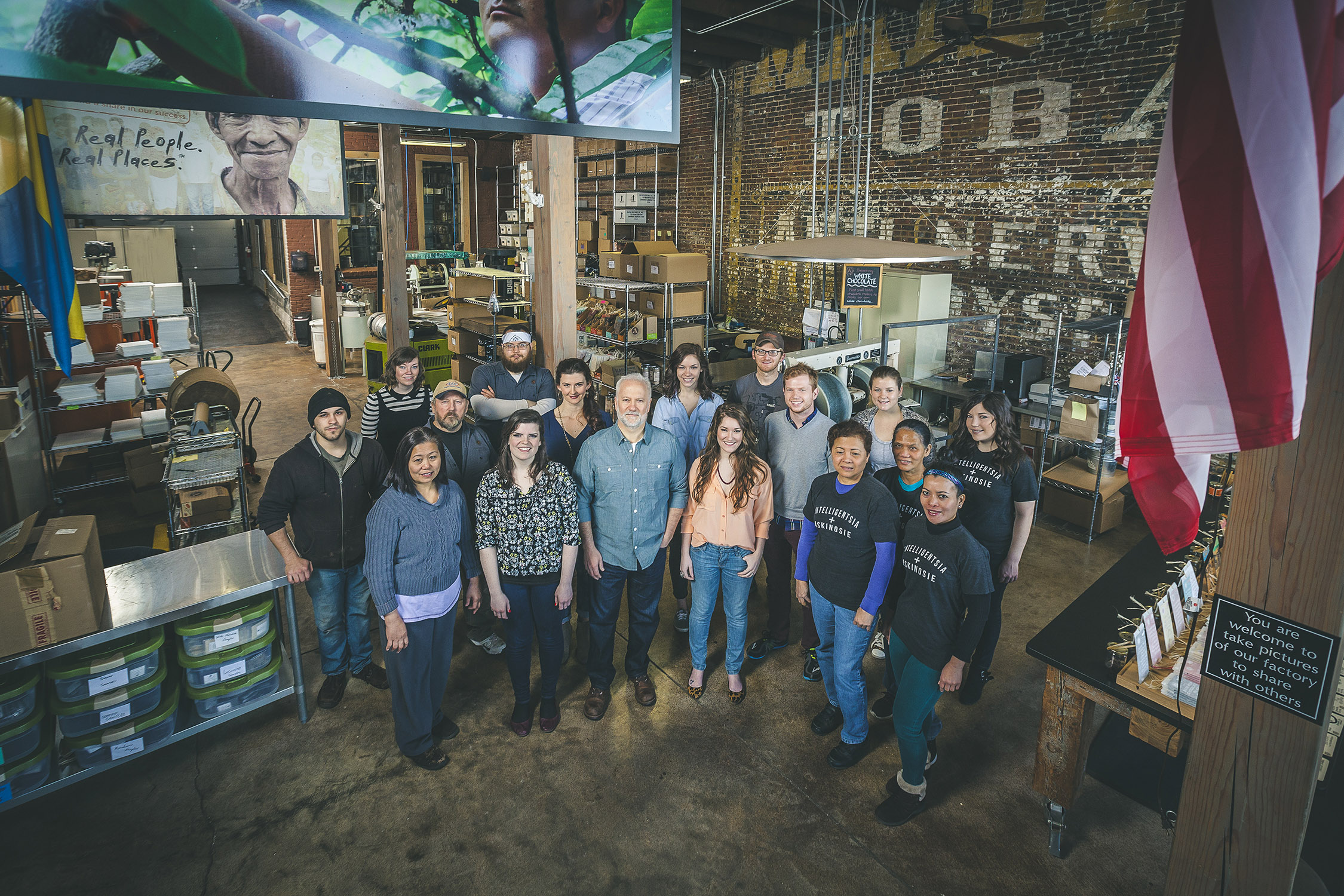
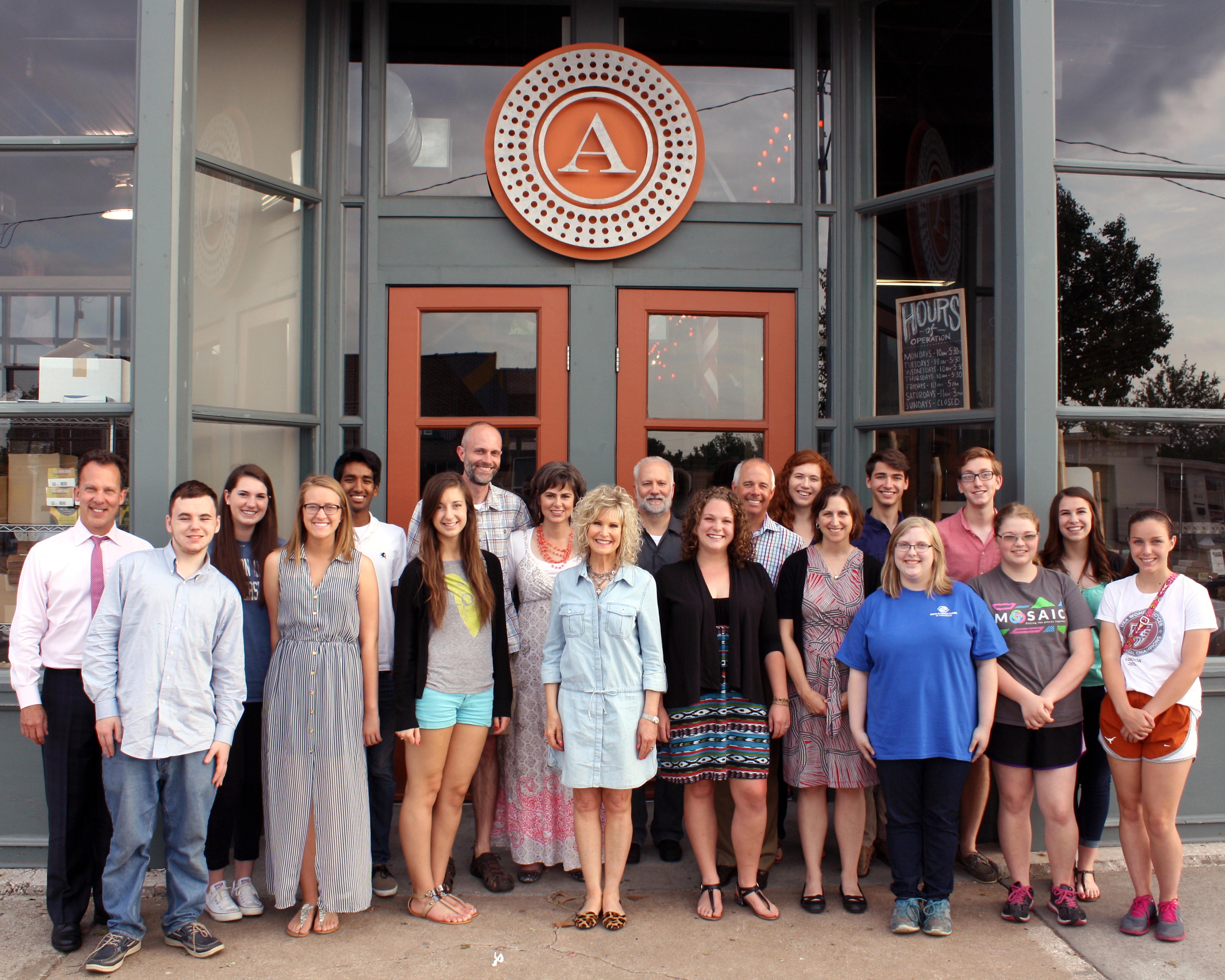
There’s the football image of a huddle but it doesn’t fit here since the quarterback leads it. I love the Webster intransitive verb example, “to gather in a close packed group;” “They huddled around the campfire.” At Askinosie Chocolate we are 16 full time and 3 part time people in a close packed group. When it comes to the perfect huddle, chocolate making is no different than rebuilding transmissions or providing nonprofit disaster relief services or brewing beer. Lawren and I detail this subject in our upcoming book but today I wanted to take this a little deeper.
Here’s what a huddle looks like at Askinosie Chocolate and you’re welcome to adopt whatever you find useful for your own great huddle.
The What
Until a couple of months ago we met every Tuesday morning at 9am for one hour. We’ve been experimenting lately with every other week but the point is we’ve doing this company wide “meeting” for nearly eleven years. Everyone in the company attends including our remote workers. For example, our Controller is in St. Louis, our Chief Marketing Officer is in Austin and they both join in via Skype. They see us and we see them. The Agenda moves at a fast pace and looks something like this:
Quick Opening from our COO about what’s coming up this week.
Cocoa bean report from me. I report on the status of the crops, the farmers, export dates, arrival dates or any problems we’re encountering.
Sales & Marketing overview from our CMO.
Sales Report sharing all channel sales numbers. This includes monthly plan (budget), forecast, and actual on a whiteboard. This report generates lots of questions from the group.
“Jack Stack” Report from our COO. This is a group of people reporting a condensed financial statement (we call this spreadsheet the “Jack Stack” in honor of the father figure of Open Book Management) covering plan, forecast, and actual.
Inventory Report from our Facilities Manager. This report informs everyone where we are, on a whiteboard, with all of our product inventory especially the sales team.
Production Report. Our Production Manager lets us know, using a whiteboard, where we are with finished chocolate production reporting plan, forecast, and actual. The summary also includes what products we are making this week and next.
Safety Report from our Production Manager.
Chocolate University Report. Our CU Executive Director reports the status of all things related to our community development and education projects.
Marketing Update. Our Design Manager reports on recent press mentions, and open packaging orders.
Workaversary celebrations. If we have someone celebrating anniversary of working with us then we celebrate them. I plan on dedicating a separate post to only this. It’s really powerful.
The Last Word. Our Facilities Manager concludes the huddle with a few minutes of uplifting thought to either challenge us, inspire us, get us thinking about our work, our lives and each other.
All of this happens in one hour unless we have a workaversary then we add on another 15 minutes because we have some awesome snacks that this person loves and spend a little time chatting with each other. I said “almost” perfect huddles because we’re continually finding ways to make them better and even more meaningful.
The Why
The most important aspect of our huddle is that almost everyone talks or reports something. The practical benefit is that many people need to know bits of important information from diffused areas of our little company. We don’t groups in the company siloed off from one another. Do the people packaging our chocolate bars really need a status update on our school lunch program in the Philippines? Yes they do! The huddle does not replace other meetings, such as sales or production, but it can make them shorter and more to the point. The huddle is an easy place when people can ask the reporter questions in a spirit of teamwork. Almost everyone walks away from the huddle feeling like they matter. They either obtained information they needed or they gave it or both. Every huddle we’re celebrating big and little victories with a single thunderous handclap in unison. The dominant feeling is “I belong.”
The meeting is full of numbers, numbers that most companies do not share with employees. It’s all part of Open Book Management which I’ve used for nearly 20 years. The numbers tell a story, both good and bad. There’s a sense of “we’re all in this together.” Kinship is an important principle in our company and our huddle is an integral component. The huddle is essential for any organization or large workgroup sharing a collective vocation or calling. My book is all about this. The huddle is ostensibly costly and one could make the argument that not every single person is absolutely critical to being there. We are taking up valuable chocolate production time with this gathering. It’s probably more costly in ways I cannot even estimate if we did not huddle together “in a close packed group.”
My huddle mentors: I learned about these years ago from Jack Stack, The Great Game of Business and Ari Weinzweig, Zingerman’s Deli. Buy their books and read them! You will not be disappointed.
I was about 40, making a lot of money, winning cases, making a difference, and loving my work and then. Then I stopped loving it but kept on. I started praying a simple prayer that went like this: “Dear God, give me something else to do.” I have never, as my friend David Mercer puts it, viewed God as my “cosmic bellhop.” Regardless of the intensity of my prayer there was no magic dust illuminating the path before me. No, instead there was anxiety, depression, searching, years of that prayer, and work, work, work, work, work, work. Work of a different kind.
You can imagine that the guy known for the courtroom – spending in the neighborhood of 15 to 20 hours of preparation for every hour of trial – would uncover every business opportunity, start-up, and franchise possibility. I relentlessly looked for hobbies I could convert into businesses. I did what I knew. I worked hard and dedicated myself with great passion at finding my next passion. How did that work out for me you ask. Not so much.
I have friends, former colleagues, and strangers who email me out of the blue asking for the illuminated path. Just like I did. Here’s the secret: there’s no weekend conference, book, life-coach, research project, or peak experience that will magically unlock the door that seems to be blocking us from meaningful work. Notice that I included books in that list. That’s right. My upcoming book is all about this very topic but reading it is not going to make it happen. I read a lot about meditation but it does not make me a better meditator.
It took me five years of wandering, wondering, serving, praying and listening before I even heard a faint whisper. It takes deep work on the inside in order to find meaningful work whether it’s the work we’re in right now or what we know is possible. Oh sure, we can skip over the gut wrenching hard parts, leave our broken hearts unexamined, and move to the next shiny thing but we’ll be right back where we started. If you want to know which thing you should invest in I am not your guy. If you want to know what it might be like to take the road less traveled and one without any guarantees then talk to me. And once you “find it” the work never stops because we don’t wander and wonder in order to find a destination. Hint: there isn’t one. We do this work so that we can keep finding our true selves as Thomas Merton would say. On the worst days I have stress, lose my cool, and forget to breathe just like any other job, but on my best days I experience the Divine in meaningful work. I am working on treasuring those best days in my heart so I can sprinkle a little bit of that around those days in the middle. And now, I have a responsibility to let others know – who ask me – that a broken heart is, despite news otherwise, a good and holy thing.
Thinking, talking and writing about dying, death and pain comes natural to me. I guess because I’ve seen it up close in my family as a teenager and later as a volunteer at a local hospital and grief center. I am burdened by it. Sometimes the weight is existential (what is the meaning?) and at others it’s practical (what can I do for this person in pain?). I pray for people in the mornings right after I wake up because it’s the most undistracted time of the day when my intercessory meditations are primed and ready to go. I’ve found that praying for people at night makes it hard for me to sleep. At the moment I have several friends with children who are suffering life threatening illnesses. They each have a spot I wish they did not have on my prayer list. I write about dying, death, and pain in our book coming out this November. And you thought the book was only about chocolate?
I think about these suffering children enduring painful treatments, hoping for more time and a cure. They may very well die and leave a grieving family behind. During these times my faith is not so much tested as it is worn. I remember when my father’s former-Marine-Corp-hard-body was riddled and deteriorating with metastatic lung cancer. I was 13 and 14 during his illness. The church prayer group came over at all hours of the day and night. They told me to never speak of death because it was doubt and that Jesus would not heal him if I had doubt. The problem was that he kept getting sicker and I recall praying, “God, where are you? Please hurry up because he’s not going to make it much longer. Please!” It was my fervent prayer. I prayed so very hard, full of desperation. He died and then my faith hung by a thin thread. A thread that I did not look at, tend to, or care about for many years.
Now I have years of paying attention to the thread of faith in my life holding it together with real life experiences, searching, talking, asking tough questions, reading, meditating and lots of prayer. But when my friend’s little child might die from bone cancer there simply are no answers. None. There’s nothing to hide behind. There is no “help”. All of the religions of the world have methods of resolving this kind of suffering. The ones I am most familiar with are Christianity and Buddhism. My proclamation that there are no answers is itself a “method.” We want something we can hold on to, something, anything. And if there’s nothing to hold on to then can we at least uncover some modicum of meaning? I am sorry to say this but probably not. Can we, after the fact, make meaning from it? You bet we can! But for those in the middle of the storm there is no meaning and not much to hold on to as we slide down the side of the cliff grabbing for everything in site. Will this branch stop me? Will this rock hold me? No and no.
That sounds pretty depressing. Well, it is. So if there are no answers what are we to do? It depends on who you are in this equation? If you are the friend of the parent with a possibly dying child then I am writing this to you. What can we do?
Be present, be present, be present. Call your friend and tell her you are thinking of her. See if she can meet you for coffee.
Listen. I am not good at this but a work in progress.
Social media is nice but not a substitute for #1. Our fear and intimidation sometimes prevents us from #1 because the situation is so horrible . . . we’re afraid we will say the wrong thing. This is why #2 is critical. Meeting for coffee, giving your friend a hug and listening is never the wrong thing.
Drop the platitudes and answers. It’s our nature to normalize everything but it really does not help.
Remember that this is not about you or me and our tested faith. It’s about your friend only and what they need.
Treasure your friend in your heart at certain times of the day. Maybe it’s the morning when you wake up or a first drink of tea. If you’re a praying person then please do that.
When my faith is worn, my prayers seemingly unheard, I am guilty of picking up my old trusty tools that give me comfort. My safe harbors. I’ll read my old stand-by books, talk to my friends, and search for answers just as in years past. But now I rely on my years of practice knowing that much of the fortress I’ve built can crumble away but I will always have my thread. I know it. Your thread will support you and the friends you love.
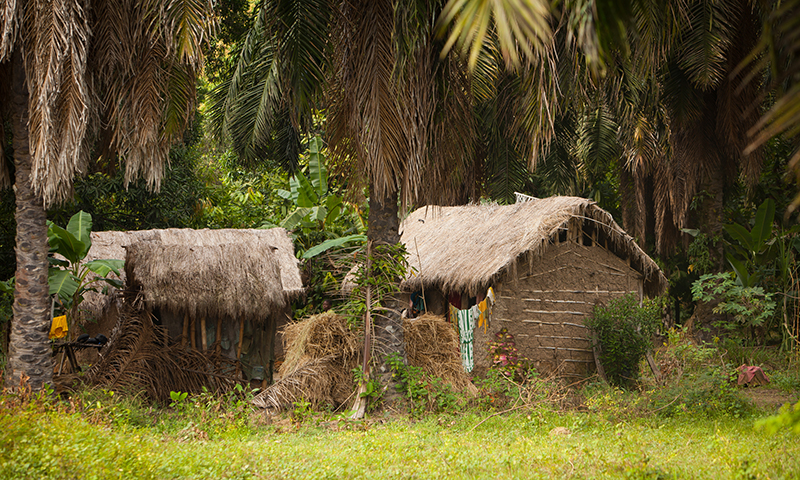
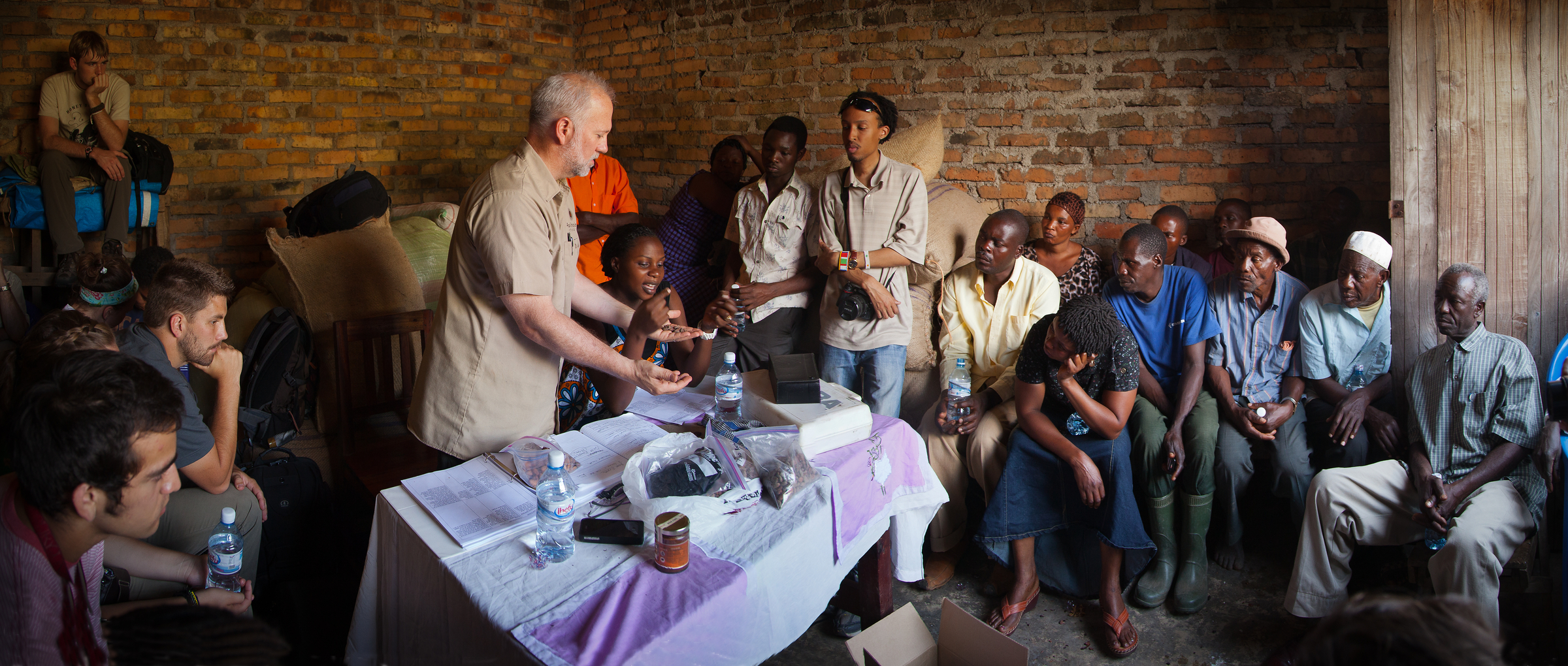
A cocoa tree canopy overhead made it seem even darker than it was as the sun was setting. I was walking on a narrow trail in the maze of other trails crisscrossing each other in the Tanzanian rainforest with a small group of cocoa farmers and pretty sure if I didn’t keep up that Google Maps would be of no help. Anyone who knows me knows that I love walking and talking. It’s my chance to ask questions. We’d just visited Wilson’s kinfolk on his little farm who were mourning his death a month ago. We went to pay our respects to his family and say “pole sana.” We sat under a large shade tree in front of his house and as I listened to his siblings tell stories I remembered his kind face. He’d been sick for a long time they said. He was an original member of the small cocoa farming cooperative where I’ve been sourcing beans for many years. We gathered for a moment of silence around his tidy dirt grave decorated with a small wooden cross next to his wife’s and a few feet from their house. The walk back to the village center with Mama Mpoki – the Chairwoman of the cooperative – and four other farmers got me thinking which led to conversation.
As we walked back I was pondering the ways in which the villagers respond to each other in times of death and grief. I played the tape in my mind from a few days before when the farmers all gathered at their central fermentation and drying site in the middle of the village and worked together to move our fermented cocoa beans onto the nearby drying pads in the sun. They stand shoulder to shoulder–men and women and mothers and grandmothers carrying babies in a sling–and pass buckets of beans to each other, all the way down the line. They laugh, talk, and gossip and I loved working right alongside them. The word is joy. Joy is pretty much universally recognizable in any culture. I’ve observed it during shared meals, at worship, while working and walking. So I asked Mama Mpoki, “What is the secret to your joy at work, I saw it, I don’t think it was made up for the sake of my visit?” Her answer confused me, “We will not permit more than 65 members in our cooperative.” I said, “OK, but what does that have to do with farmers staying after meetings lingering and clearly enjoying each other?”
Mama Mpoki explains “We’ve written this membership limit into our constitution. We decided that 65 members is enough. The secret is that we trust each other. If there were more members then we might not be able to manage that trust in the same way we do now.”
Make no mistake about it, the farmers want better education for their children, sturdier housing that won’t blow away in a storm, greater access to basic medical care, electricity, running water. Yes, they have hope for these things but somehow in their absence, in their poverty, they have dignity and joy. This daily living of a “more is not enough” life inspires me and gives me great hope in the future of humanity. Spending time with them over the years as their friend gives me hope for myself.
In a twist of the Mark Twain quip I conclude that, “The news of [craft chocolate’s] demise has been greatly exaggerated.”
Much has been written in response to the Mast Brothers scandal (or what our team refers to as “Mast-gate”). Nearly every perspective, rebuttal, or defense has been shared, so much so that I debated whether to publish this post, concerned I’d be adding to the noise. But there’s one perspective that’s missing and it’s that of a (fellow?) chocolate maker. I am obligated to speak up. In all of the aftermath, there’s been a commonality among the comments, many negative but many actually positive. I would group the negative sentiments shared by folks about craft chocolate on social or traditional media in the following categories: (1) anyone paying $10 for a chocolate bar is a sucker; (2) marketing claims such as “artisanal” need to be certified; and (3) you can’t believe brand’s “stories” anyway because they all lie. As a ten year veteran of the craft chocolate industry slogging it out everyday here is what I know:
1. The American craft chocolate bar at $10 is still “worth it” and no, you’re not being fooled by companies charging that—or more—for it. You are being fooled by companies charging $1 for it though. Global context is imperative. Most of the nearly 6 million cocoa farmers around the world are poor, very poor, in a way that most of us can’t fathom. It’s the Mother Teresa Calcutta kind of poor but in West Africa. They were poor before Mast-gate and they remain in that condition today. I’ve logged 28 separate country of origin visits to remote cocoa farms on four continents, all documented on our website and social media. That might not sound like many trips but my body suggests otherwise. I’ll be departing next week for my 29th and it takes 44 hours to get where I’m going from door to door. These journeys have afforded me the chance to soak a lot into my soul over the past decade.
In the last two years I’ve developed some theories on the obstacles and possible solutions to the extreme poverty among cocoa farmers. That, however, is not for this article. I am working on a book with my daughter, part of which is dedicated to detailing this thorny issue. The preview is this: the chocolate we have come to know and love should cost more not less. The West African cocoa farmers who grew the beans that were purchased by Big Cocoa (you know who I am talking about) to make the 3 ounce $1.40 “chocolate” bar make between 50 cents and 84 cents per day farming cocoa. You read that right. Per day. That fact is directly related to the price per metric ton and the proportionate share the farmers actually receive. This fact is not a secret but it’s taken even me, an experienced and in-the-know “expert”, a long time to fully wrap my brain around this. I don’t buy beans in West Africa but that does not alleviate my responsibility to do something about this problem because chocolate is my industry. I need to be part of the solution. And the aftermath of Mast-gate challenges us to always remember this context.
With that backdrop in mind it’s natural to read the recent press and conclude that a $10 Mast chocolate bar is not worth it because the company was built on a lie. It is not natural, however, to conclude that ALL $10 chocolate bars are not worth it.
The point is that there are many small batch, bean to bar American chocolate makers besides our company trying to both raise awareness of farmer poverty and actually do something about it. Take Taza Chocolate for example. They started about the same time we did and they’ve been at the forefront of the issue in the Dominican Republic, making a difference. As chocolate lovers we can always complain about the price being too high; but that requires us to look beyond the chocolate bar and find out as best we can if the company stands for anything at all to create value, making the $10 purchase worth it. This is the bottom line: most cocoa farmers are very poor and the news that one craft chocolate company was built on a lie is no reason to slow progress for cocoa farmers—who are breaking their backs every day to bring us what we want—obtaining higher prices and greater profit for their crops.
2. Where else are you going to get the absolute best of something for $10? The best cheese, wine, olive oil, what? I’ve heard Ari Weinzweig of Zingerman’s Deli fame say this many times. I challenge you to walk in to Zingerman’s Deli—one of the most famous food destinations in the country, a company with the highest degree of integrity for nearly 35 years—and ask them to give you the best fill-in-the-blank. And tell them that your budget is under $10. Maybe a loaf of bread, but good luck. I guess you could argue that Zingerman’s and all of the decades they labored to build their reputation is simply great marketing but I don’t think that’s true. If we want food that tastes great and is great, then prepare to pay more. This applies to other things too (apparel, for example) but food is what I know. We’ve been conditioned to buy industrial, flavorless, cheap food and our tax subsidies will ensure that it stays this way. Read more about this travesty in Simran Sethi’s new book, Bread, Wine and Chocolate: The Slow Loss of Foods We Love.
Most people who buy our chocolate want chocolate that tastes really good and are willing to pay for it and $10 is a great value for the best of something. I am not saying we are the best. I think we are among the best on many of our products. I am eating a Rogue chocolate bar as we speak and I am telling you that whatever I paid for it, probably $13, was not enough. I can go down the list and name chocolate bars that are awesome and a great value for between $10 and $20. The value proposition is even greater if you think the company is a good company.
Finally, most craft chocolate makers are not rich unless they were rich before they started, in which case they are now less rich. Believe me when I tell you that American small batch chocolate makers who are charging $8, $10, even $12 or more for a chocolate bar are not making a lot of profit. Our company is profitable. We have carefully managed our company finances since I poured my life savings into the business 11 years ago and have taken on very little debt and no investors. The debt aversion is all my wife Caron; I credit much of our profitability to our ultra-conservative approach to debt. Additionally, we hired a COO two years ago and she’s added years to my life. Sorry to burst any bubbles but the kind of profit margins to make us rich simply don’t exist in the small batch chocolate world.
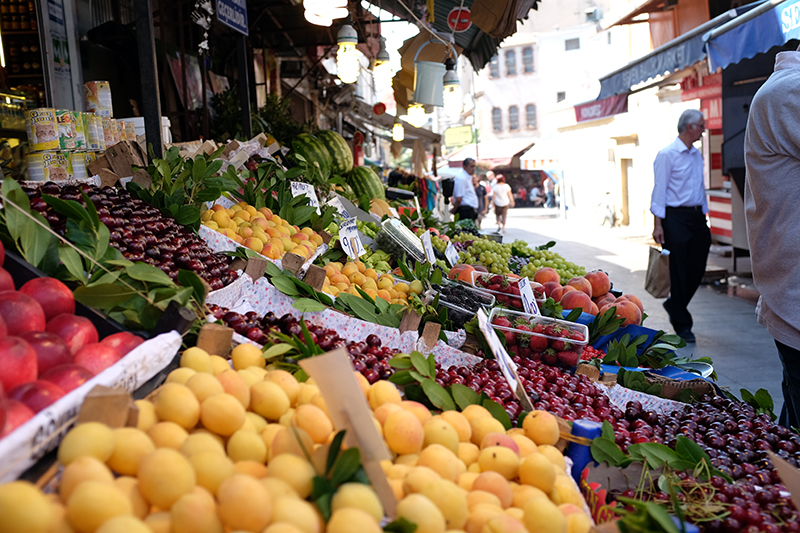
3. Relationships and personal trust are more important than certifications. This is what we call kinship at our factory. Many of the people who buy our chocolate like the relationship they have with me, my daughter, the 16 other people who work in our company, the store owners (and their teams) who sell our chocolate, and importantly, the farmers who grow our cocoa beans. I’ve seen this in action at farmer’s markets in my town for years. It’s not going away. People love talking to the farmer about the produce or whatever it might be. There’s something human in a simple conversation about the thing you’re considering buying and eating. I’ve seen it in Florence at the Mercato Centrale, similar places in Paris, London, Istanbul, and almost every town I’ve visited in cocoa bean countries around the world. People at food booths engaging with artisans, looking, smelling, tasting, talking, smiling, inquiring, negotiating and buying.
This is where kinship happens. Transparency goes a long way in creating trust.The more dependant a company is on their story to sell the product, the greater the responsibility to be transparent where possible. For example, if you go to Dandelion Chocolate in San Francisco you can see them making chocolate at every step from the front of the shop and retail area. If you visit our place in Springfield, Missouri you can stand in our tiny retail area and see every single machine in our factory except one (which is in a soundproof room) and you can see that one on a tour.
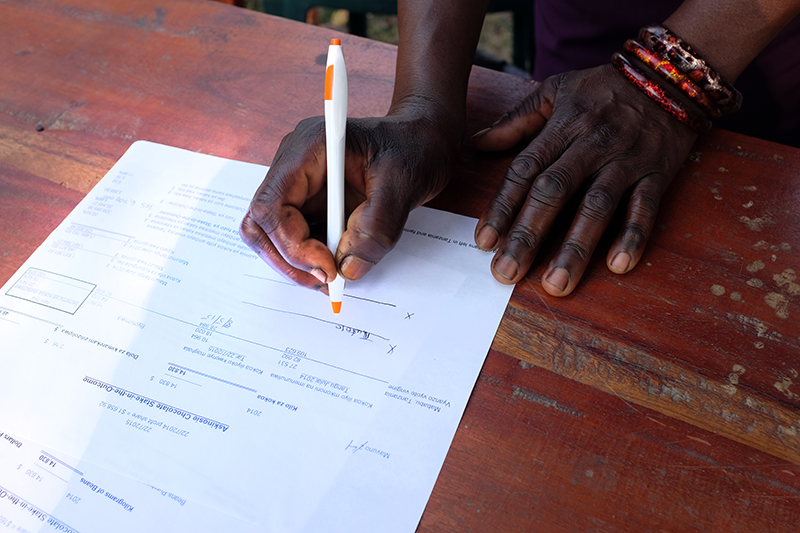
We practice Open Book Management and share the numbers in our weekly company meetings. We share our financials with our farmer partners in their language at every profit share meeting with them so they can see how we calculate their profit share. Yes, we’ve translated our financials into Swahili. Our obligation does not stop there because we need to be even more transparent than we are and we are working on it.
Green-washing, social washing, bean to bar washing, all of the washing is coming to a marketing plan near you if it hasn’t already. There’s a whole lot of lying going on in the food world and the speciality food world is no exception. It’s the wild, wild west. Look no further than the extra virgin olive oil fraud in Italy as reported on 60 Minutes last week. The report concluded that at least 80% of the EVOO we buy in the United States is not really EVOO. And worse – much of is adulterated and the Italian government is fighting back. Dig deeper by reading Tom Mueller’s book Extra Virginity: The Sublime and Scandalous World of Olive Oil. So when companies lie the question we have to ask is: are the lies material? That is, would the truth effect our support or buying decisions?
We should not be fooled into thinking that a fancy certification will void our need to be responsible buyers. Certifying a thing does not prevent a seller from lying about it. In fact, I could make the case that lax audit procedures of many certifying agencies give cover for liars to ply their trade with greater impunity than if they were not certified. Too many companies hide behind the stamp of a certification with willful blindness of certifier practices. We are not certified and never will be. Our sugar happens to be organic certified but I buy it for reasons other than that. The 3rd party certification industry is rampant with fraud. We all want sellers/producers/artisans to be authentic. Just be who you are. I know that sounds overly idealistic but it’s a goal I can expect for myself. If you’re going to sell products based on your authenticity and perceived transparency, then you have an enormous obligation to be those things and be honest.
This is why we ought to be prepared to prove the material claims that we make and candidly we’re not all the way there yet. I intend to fix this. I am not saying that we should disclose proprietary information but we either prove it or ask for dependance on trust which can either be accepted or rejected.
I started this essay with global context and I will conclude my thoughts with personal context. My business could crumble tomorrow but there are some things that are real and true that will always remain. My reason for starting the chocolate business was not because I thought we would be God’s gift to the chocolate world. I did it in the hope that I’d have a chance to learn something, create something, and grow little by little. One of the reasons I picked chocolate is because I knew there would always be more learn, with no bottom of the pool to rest on. It remains an endless learning process. What I did not know is how it would change my heart. I did not know that our business would be an incubator for kinship.
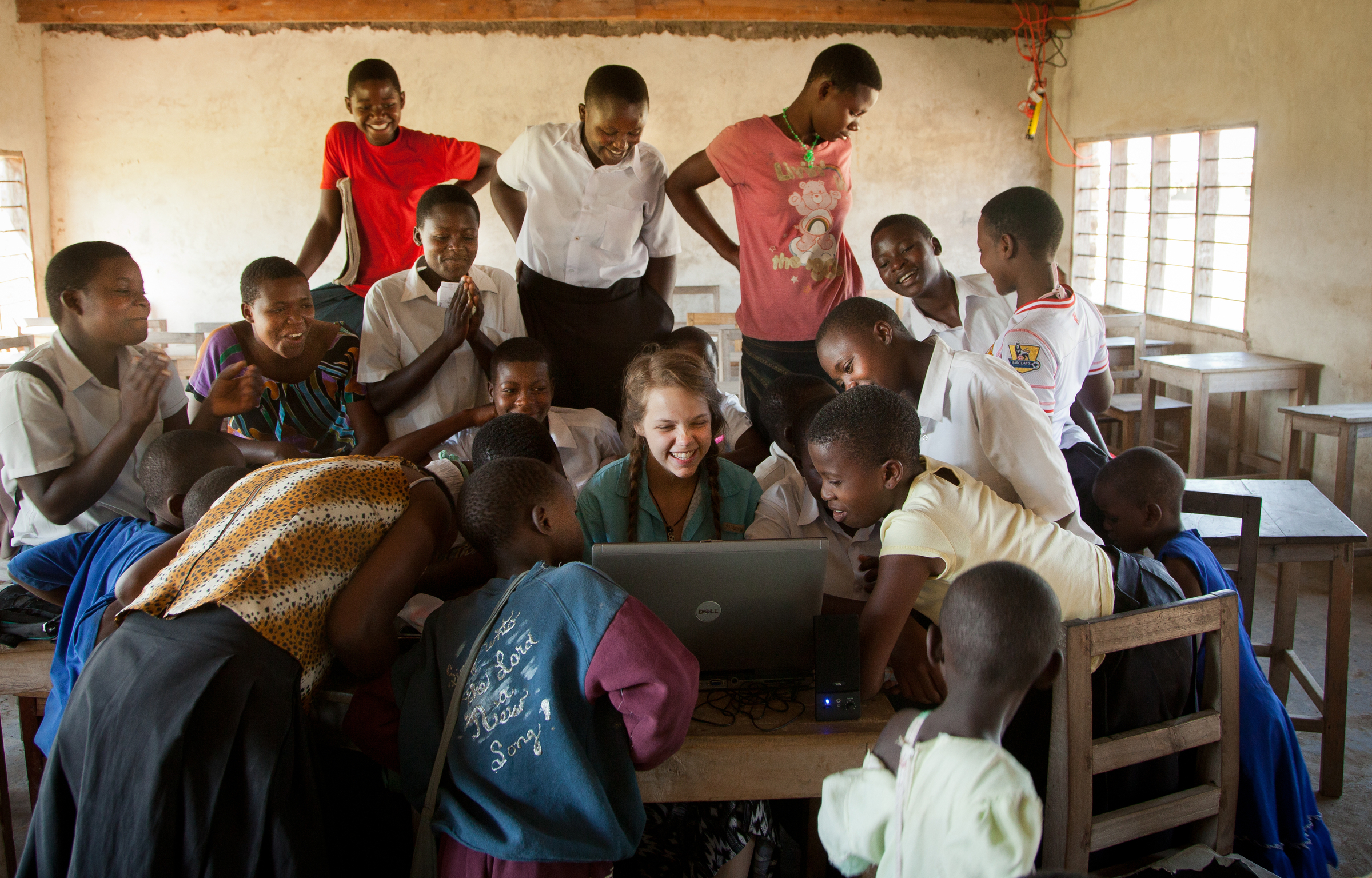
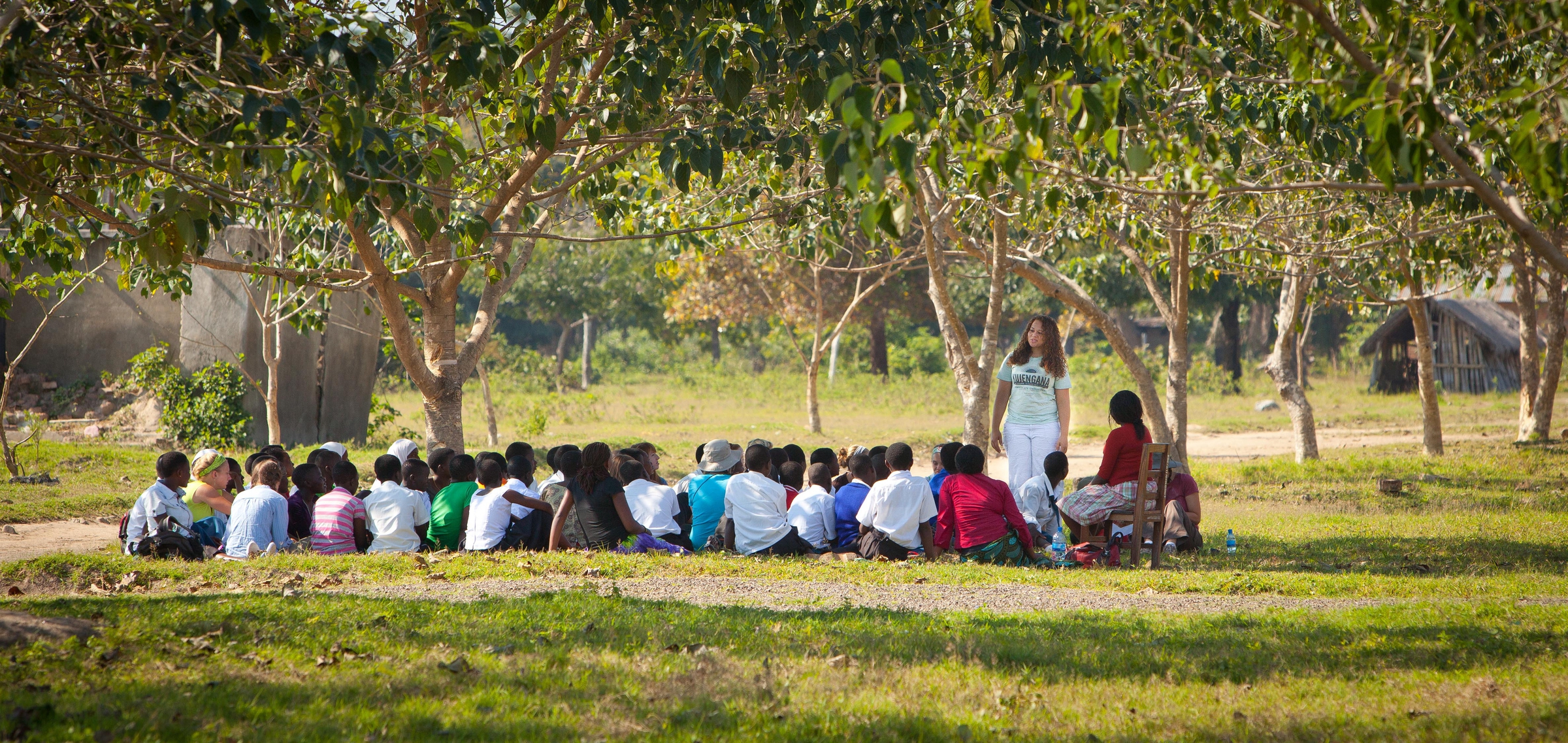
Just one of many examples happened this past summer. My daughter Lawren and I were in Tanzania working with our farmer partners and a local elementary/middle school. We were asked to host a Visioning session for 200 girls in the Empowered Girls club we fund in the remote village of Mababu, Tanzania (one of the four places we buy cocoa beans). I was apprehensive about its effectiveness because I’ve trained American business people on vision planning and even cocoa farmers, but never 13 year old school girls in remote Tanzania. Lawren took the first part of the session, creating a simplified definition that, “vision equals hope plus a plan.” As part of my session I asked for two volunteers. Upendo and Maria came to the front of the classroom. I asked the girls, “Can you remember a time when you imagined a future and it happened as you imagined it?” I asked Maria first and she said she could not think of anything. She asked me if I could come back to her. I was so sad when I heard that I almost could not stand up, but I kept it together. When I came back to her, she bravely stood with me up front and said imagined, “going to fetch some water” and that she did do it. Her vision was that she would take a bath to feel clean. The girls understood. What a great example. The ensuing discussion for the rest of the afternoon turned from sorrow to joy, as we used example from other girls about how to dream and turn those dreams into reality. It was one of the best days of my life; Lawren’s too. We will never forget it. And we experienced it together—father and daughter.
These experiences are what make craft chocolate. Context and perspective keep me focused on the good things happening in the day to day world of specialty chocolate. My hope is that we can earn the respect and trust of chocolate lovers by being as passionate about doing the right thing as we are about creating great chocolate. Or as we say at our company “it’s not about the chocolate, it’s about the chocolate.”
I’ll admit, I dont keep up with my chocolate reading very well but I did read, with great interest, Megan Giller’s informative article on Slate.com last week, “Why Chocolate Experts Hate Mast Brothers.” I read this one in particular because Ms. Giller is possibly the first journalist I am aware of to dive headfirst into the deep end of the chocolate pool (or tank, if you will — a little chocolate humor for you) as it relates to the self-proclaimed “dangerous” company — Mast Brothers.
I am compelled to respond, because I’d like to address some of Rick Mast’s remarks in the article. Here’s the short history of the beginning of American craft chocolate. In 1997, Scharffen Berger was the first new bean to bar chocolate factory in the U.S. in over 50 years. They were acquired by Hershey in 2005. I started making chocolate in the summer of 2005, then incorporated Askinosie Chocolate in August of that year. Theo started in late 2006. Steve DeVries started selling first, then Taza, then Amano, then us, then Patric; all opened from early to mid-2007. Our five companies formed the Craft Chocolate Makers of America with Alan McClure as Chair. While I’ve never spoken with anyone at Mast, it was clear in 2008 when we started the group that they did not have any interest. We are no longer a formal organization but we talk frequently. This is fine, we didn’t expect all craft chocolate makers to join nor did we judge their chocolate based on membership (there were no dues, for the record).
The “expert” title was used in the Slate article in reference to Clay Gordon, Lauren Adler and Eagranie Yuh. Rick Mast said, “We have achieved incredible success without paying the self-proclaimed industry chocolate experts that you have cited a penny for their ‘expertise.’” First, Clay Gordon, is an actual chocolate expert. I met him in 2005 on my first trip to Ecuador. Even then before most of the world couldn’t tell craft chocolate from Hershey’s, he already had a national reputation as a chocolate expert making a living from people willing to pay for his knowledge and experience. I paid him to accompany me on some of my very first cocoa bean origin trips in 2006 as an expert. At that time, I did not have the confidence to know what I was looking at but I knew enough to recognize that I needed to consult with someone of superior knowledge in order to produce a superior product before I became more experienced myself. I knew that he could help me buy the best beans possible and he did. Now, with over 20 origin trips under my belt on four continents I have more confidence in my cocoa bean sourcing/buying skills than my first trip almost 10 years ago. As far as I know not a single one of our retail partners (wholesale customers) around the world have sought Clay’s opinion as to whether or not they should bring our chocolate into their shop. The fact remains, however, that there are not very many people in the world who possess Clay’s knowledge of chocolate. This leads to Lauren Adler. She is the owner of Chocolopolis in Seattle and they carry our chocolate. We both started about the same time. There is no panel of judges making these buying decisions because Lauren, herself, is the judge. Lauren has been selecting the chocolate carried in her shop since the beginning, relying on her own palate and that of her staff (and now her customers). The same way that every other of the 700 stores that we sell to. I am not aware of one single shop carrying our chocolate from New York, to San Francisco, to Stockholm to Tokyo who has made the buying decision of what to carry in their store by consulting a “chocolate expert” on what is good and what is bad. They (the buyers) taste it and then educate themselves about the company producing it.
Lauren is also an expert, but in a different way than Clay Gordon. As an owner of one of the most popular chocolate shops in the U.S. she has tasted pretty much every chocolate out there and has to make good business decisions about what brands to carry and what not to carry every day. I have never paid her a penny, nor any of our other retail partners. She does not carry everything we make and I am certain that she does not love everything we make. Regardless, I trust her and we frequently seek her feedback. Eagranie Yuh is also an expert, but as a writer and judge. She is not “self proclaimed,” rather she’s developed her reputation as someone who knows about chocolate from years of writing about it. She has authored many articles about chocolate in the last six years and most recently Chronicle published her book — The Chocolate Tasting Kit. There are food competitions all over the world and somebody has to be the judge and chocolate is no different. We have never paid Eagranie for any “expert” services. Like Lauren, she does not like everything we make and is not afraid to say it. And we appreciate her opinion and listen to it, just like the others, especially our customers.
Some of the people interviewed in the Slate article did not like the Mast chocolate and they clearly articulated their reasons. Lauren Adler is right when she said that we don’t have a good frame of reference yet with regard to standards like the wine industry. While it’s true that the wine industry, and coffee for that matter, have more mature tasting standards, chocolate is on its way. Some in our industry — such as Colin Gasko at Rogue Chocolate — are trying to establish common standards for tasting and quality. There are very basic defects, for example, that the experts in the article noted about the Mast chocolate that any chocolate expert (“self-proclaimed” or not) would find: moldy or stale aroma or flavor and chalky texture. I am not suggesting that Mast chocolate tastes this way because to be fair, even though I’m tasting chocolate all of the time, it’s been a few years since I’ve tasted one of their bars. My point though is that while chocolate tasting standards are not as mature and codified as wine, it is possible for experts to have some agreement on defects which appears to be the case here. Does that mean that people should not journey “by the thousands” per week to the factory in Brooklyn and buy Mast chocolate? Of course not. I am thankful that so many visit their factory to learn about the bean to bar movement because it’s good for the entire craft chocolate industry as more people become aware of another strata of chocolate possibilities in addition to Mast Brothers. Mast is a gateway chocolate. Those who visit their factory and love the experience will certainly seek out and experiment with other brands.
I really doubt that any specialty shop in the country would decide against carrying Mast chocolate because they are, as brother Rick pointed out, “a dangerous company because we are outsiders to the chocolate industry never leaning on industry norms.” That’s like saying a wine shop would not carry the agreed-upon best Burgundy because the winemaker is a rebel or outsider. In fact, the suggestion is ridiculous. The real reason is that profitability is paramount for any business, especially small specialty food and wine shops. And — don’t think for a minute that any store owner in their right mind would refuse to carry a profitable line just because they don’t care for the personality of the maker.
Confession: I actually think their beards are kind of cool and if my hair wasn’t pretty much all white (too many days in the courtroom) and if I was maybe 15 years younger, I would try to grow one like theirs. And honestly, there are times I dream about having a line out of our front door with “thousands of chocolate lovers mak[ing] the journey to visit our factory every week” like Rick Mast claims about his factory in Brooklyn. Our factory is in Springfield, Mo., in a part of our community that is undergoing revitalization, and populated by a variety of important social services and homeless shelters for those in need in our city. In eight years, I have never seen thousands of people here in one week, maybe not even in one year. This is why working with our retail partners across the globe — and thus making the highest quality and best-tasting chocolate possible — is paramount for us; because these stores and their fans all over the world are our bread and butter.
February’s Vanity Fair quotes one of the Mast brothers as saying “I can affirm that we make the best chocolate in the world.” When I read that I thought, “well that’s pretty bold and actually not true.” In case you’re wondering — no, I don’t think Askinosie Chocolate makes the best in the world and that mantle has never ever been my goal. I have always wanted to make “some” of the best chocolate in the world. I can say that we try to make “the best chocolate in the world” but I will never “affirm” that we do publically or even in my head. We have a saying here: “it’s not about the chocolate, it’s about the chocolate.” We mean that we have a laser focus every single day on making the best chocolate we can with the best beans possible. We know that if we fall short of trying to make the best, then we will not be able to do the other things that are important to us: opening our hearts as wide as we can to learn and respond to the needs of each other, our neighborhood, our community and the communities where we source cocoa beans. There is often tension in this tug-of-war but we not only expect it, we encourage it. In fact, this tension and ultimate balance helps us make better tasting chocolate.
Unlike Mast, we are not a “dangerous company” but like the Mast Brothers we have also achieved “incredible success,” and I can tell you the day it happened. We take local high school students to Tanzania to meet farmers and experience life changing travel in a very competitive program we started called Chocolate University. One of our applicants wrote in her essay that she lived in the homeless shelter a block from our factory as a young girl and that she would walk to our factory and that we (our employees) treated her as a special person and that we gave her and her little brother chocolate samples. When I read that I realized that we treated her with hospitality and that she liked coming to our place and that as she grew older and achieved against the odds, she was inspired to apply to our program. We selected her and she went with us to Tanzania last summer. I may die tomorrow and if I do, then I will know that we are a successful company beyond all measure.
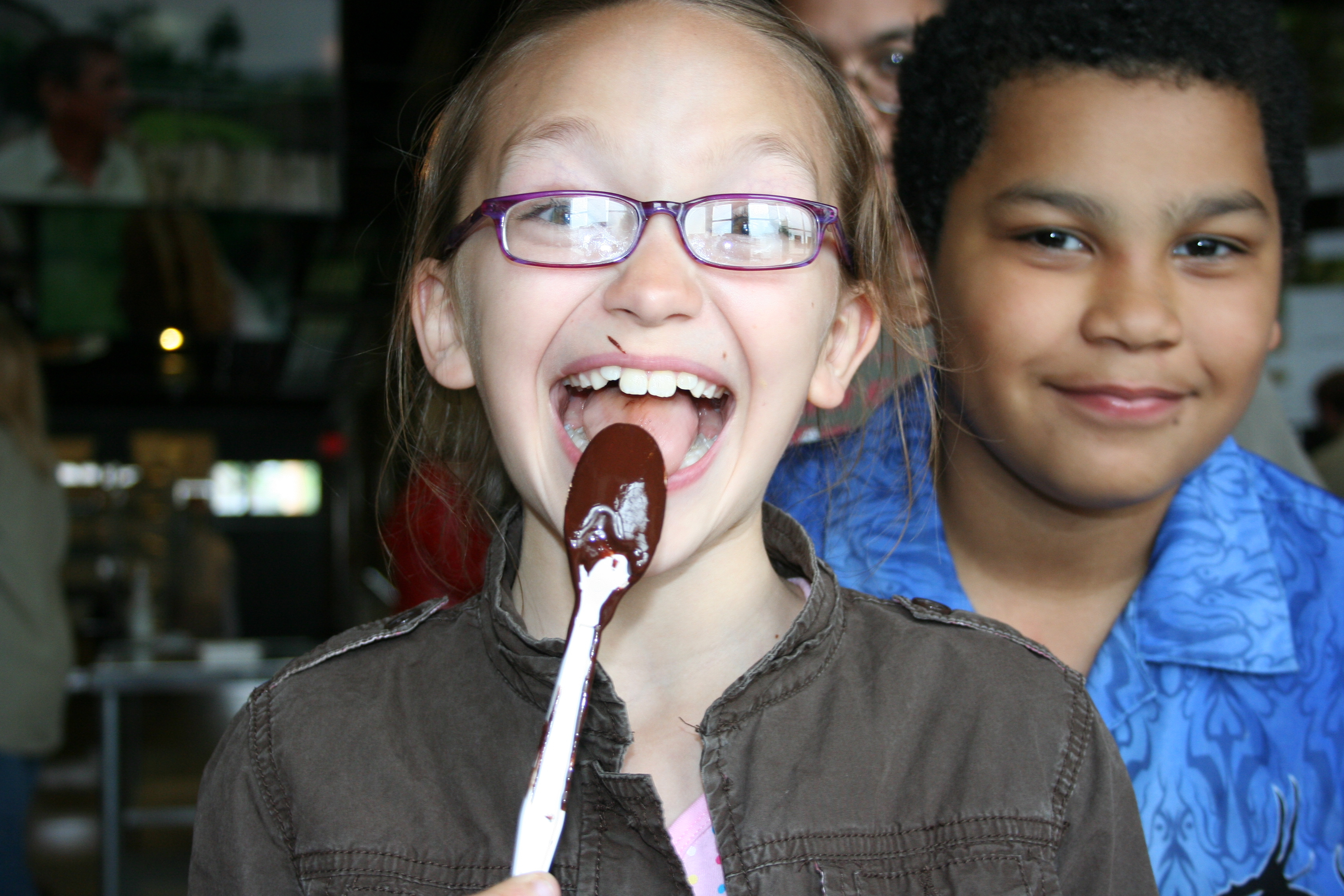
At Askinosie Chocolate we started a program called Chocolate University before the first dark chocolate bar rolled off the molding line to engage the students of our factory’s neighborhood in our business. We bought and renovated our 100-year-old building in a blighted area of town. Our street, which parallels the railroad tracks, is populated with many social services like homeless shelters, food pantries, an LGBT outreach center, a health clinic, and some new small businesses like coffee shops, a dance studio, and a pizza place. The single inspiration for starting Chocolate University, however, was the Missouri Hotel which is not a hotel but the largest homeless shelter in our community. It is a block from our factory and home to about 80 children on any given night. We were inspired to start Chocolate University programs in the nearby elementary and middle schools and at the Missouri Hotel. The students get hands on experience in our chocolate factory, learn about small business, and we hopefully inspire them about a world beyond their own.
Our high school Chocolate University program is open to juniors and seniors in our city – Springfield, Missouri. This past year about 70 applicants competed for 13 spots. We have a Chocolate University advisory board which assists in the selection process consisting of essays, recommendation letters, and finally, interviews. This year, 6 of the students are private pay (funding the experience themselves) and 7 of the students are full scholarship, based on financial need (funded completely by Askinosie Chocolate fundraising efforts). The program has many generous donors across the country who share my passion: that we can change the world by exposing bright young people to the developing world, which not only changes their lives but the future communities where they will live. The cost for the high school program is about $4,000 per student.
Side note about how easy it is for small businesses to raise money for causes they are passionate about. Our donors make tax deductible contributions to the Chocolate University Fund at our local Community Foundation of the Ozarks. It took about ten minutes to set up the account and anyone can make a tax deductible contribution as long the disbursements from the fund are made to another non-profit institution. The Community Foundation handles all of the accounting, oversight, and IRS compliance. This is a super simple way for small companies to have a large impact beyond their own employee base. The possibilities are endless.
This past week our 13 students have been living a few blocks from our factory on the Drury University campus. Professor John Taylor has been leading them through an intensive experience preparing them for the trip. We began the week with a low key session introducing the students to my personal story and our company history. The curriculum developed by Dr. Taylor includes classes on our business model, analysis of our financial statements, and the role of business regarding social issues. He was assisted this week by Daudi Msseemmaa, the Africa Director for NGO Convoy of Hope. He is an American/Tanzanian and fluent Swahili speaker. He taught the students about Tanzanian culture, religion, education systems, and basic Swahili. We spent last Saturday tasting each step in the bean to bar process as well as every chocolate we make. Dr. Taylor and Daudi also assigned students presentations on various topics related to the program. On Sunday they were physically and mentally challenged at nearby Leadership Ranch with team building and leadership exercises. We also took a lot of time explaining the work that we already do in this remote corner of Tanzania in the village where we source our cocoa beans.
The students separated into 3 groups so they could be research, educate themselves, and be ready to help us in the village next week. We have three groups: Nutrition- which will help us assess our current lunch program (we’re sustainably feeding 800 students a day) and put on a seminar for village mothers; Tutoring- this team has created an assessment questionnaire which we will use to evaluate a new Saturday tutoring program we started for girls because the female graduation rate is so low in high school; and finally our Technology group, who will help install some new computers we are bringing to add to the ones we supplied in 2012, complete with Khan Academy Lite.
The students also attended our weekly all-company huddle. They observed how we practice open book management, report sales and production scheduling, and importantly, how we celebrate birthdays. Yesterday, to bookend the week, I led a Visioning class and the students wrote their individual Vision for their Tanzania journey using the “Zingerman’s/Ari Weinzweig way” of writing down their hopes and dreams for the coming days. [You can and should read more about this in Ari’s famous book – “Zingerman’s Guide To Good Leading, Part 1“- with an entire chapter devoted to this process]
Today they are packing and relaxing at home. Tomorrow they will meet us at the airport and we will embark on our 46-hour journey to our final destination of Kyela, Tanzania. Some of our students have never been outside of Missouri and one has never been on a plane.
Once we arrive in Tanzania we’ve got work to do, things to learn, people to listen to, friends to meet, new food to eat, children to laugh with, and hikes to take. We will meet up with seasoned traveler and medical doctor, Tom Prater, who’s helped me on every trip. Here is a sample of only some of the things we will be doing next week in and around Kyela, Tanzania:
Attend some classes at Mwaya Secondary School and help install new computers
Meet with the Empowered Girls (and Boys) Clubs we fund at the school
Inspect the gourmet rice that we import and buy from the PTA and sell in the U.S., which funds the Sustainable Lunch Program at the school
Bike ride to the local hospital for a tour and then to the school
Meet with the PTA of Mwaya School to talk about the future
Meet with the cocoa farmers we buy beans from and inspect the new crop
Give the farmers an extensive chocolate tasting
Share profits with farmers from last years chocolate sales on the beans from them using our financial statement translated into Swahili
Give the Mababu Elementary School their first textbooks (that we bought in Tanzania)
Break ground on the construction of 2 classrooms at Mababu Elementary School where 1,400 children are in 8 classrooms (we’re not building them, the locals will do that)
Work on harvesting cocoa beans
Host a beach party for all of the farmers of Mababu
Hike the waterfalls of Tukuyu
Attend a local village church service
I have logged about 30 trips to cocoa bean origin countries in the past 9 years. I have met farmers, stayed in their homes, and experienced their abundant hospitality … the list of experiences is long. When I fly out with the students Friday and in the coming 12 days I will be soaking it all up as I have many times before, but most of the time I will be watching them. I will watch them transform right in front of my eyes and that is best part of my job. I can’t wait.
In Part 1, I described how I followed my dream leaving behind a lucrative criminal defense law practice to start a small batch bean to bar chocolate factory.
In summary, I felt as though I might die if I did not find another career. I fervently looked high and low for the next thing in my life. Everyday for five years I prayed that God would give me something else to do and in short: I found chocolate. I left the law, the stability of a growing practice, and great money, to follow this chocolate mystery. Or was it really a siren song?
My wife sensed that something had been stirring in me and knew that I was not happy. She knew because I told her and could clearly see that I was on the hunt for something else. She had been a nurse and then a homemaker, and not just any homemaker but the best of the best. She was and is the rock upon which our immediate and extended family rely.
When I told my wife, Caron, that I wanted to start a chocolate factory and quit my law practice she looked at me calmly, lovingly and asked, “Can’t you just double up on your Lexapro?” “No,” I said “it’s not that simple. I don’t think the dose can go that high. I cant do this anymore.” She opened up to me, with tears in her eyes, that she was unsure if our marriage (22 years at the time) would withstand the stress of this chocolate venture of mine. I know now that is what she actually said but what I heard at the time was: “you need to be happy and we will find a way to get through this.”
There’s a lot of talk about people switching careers to follow their dream. Entire books and websites are devoted to the idea. Google pulls up 212 MILLION hits on that phrase. There are many reasons for this desire to switch including boredom, the search for meaning in work, or the adventure of something new. It’s not usually about more money. We all want fulfillment, adventure, and inspiration from our work. What’s not discussed very often is the downside to taking the leap from one good career to the next. Or that sometimes it can be better to stay with the devil you know, than trade for one you don’t.
If my grandpa had still been alive when I was contemplating the jump from law to chocolate I would have consulted him for sure. He was a simple, gentle, hardworking farmer who lived with my grandma on the same farm for over 60 years. They woke up early to milk the cows, plow the fields (behind a mule in the early years), work the garden, milk the cows again, and feed the chickens. They went to the same church every Sunday. They loved and helped their neighbors and vice versa. They were not rich or poor.
They were kind, unassuming, quiet, giving, and the happiest people I’ve ever known. I would have asked my grandpa about all of this and told him what I was thinking. He would have looked at me with a gentle confusion: “What do you mean you’re not happy? I don’t understand Shawn. You went to law school, you make good money, you work hard, and you want to leave that to make chocolate?” There would have been no way to respond to him because the concept would have been foreign to him in every way. The thought of giving up farming because he was not happy wasn’t on his radar. It’s what he did — he farmed.
From Walker Percy’s “The Last Gentleman:” “Lucky is the man who does not secretly believe that every possibility is open to him.” I had the mistaken notion that I could do whatever I could dream — up to and including neurosurgery (Ok… Maybe not that one). To all of my risk taker brothers and sisters out there, I hear you loud and clear: there would be no progress on earth but for those who dared to attempt what seemed impossible, only to make it reality!
Before I get too far in this “Don’t follow your dream” diatribe, I would like to approach the bench with a sidebar. Here is the deal. Our business was profitable after only a couple of years and we continue to push right on through the most difficult economy in my lifetime with double digit growth year after year. I have the chance to work with my daughter Lawren every day.
Before my dad died, it was my dream above all dreams to work as a lawyer with him so working with Lawren is indeed a real dream. We open our books to farmers — translating our financials into whatever language they need — and share profits with them. We take local students to Tanzania in our Chocolate University program.
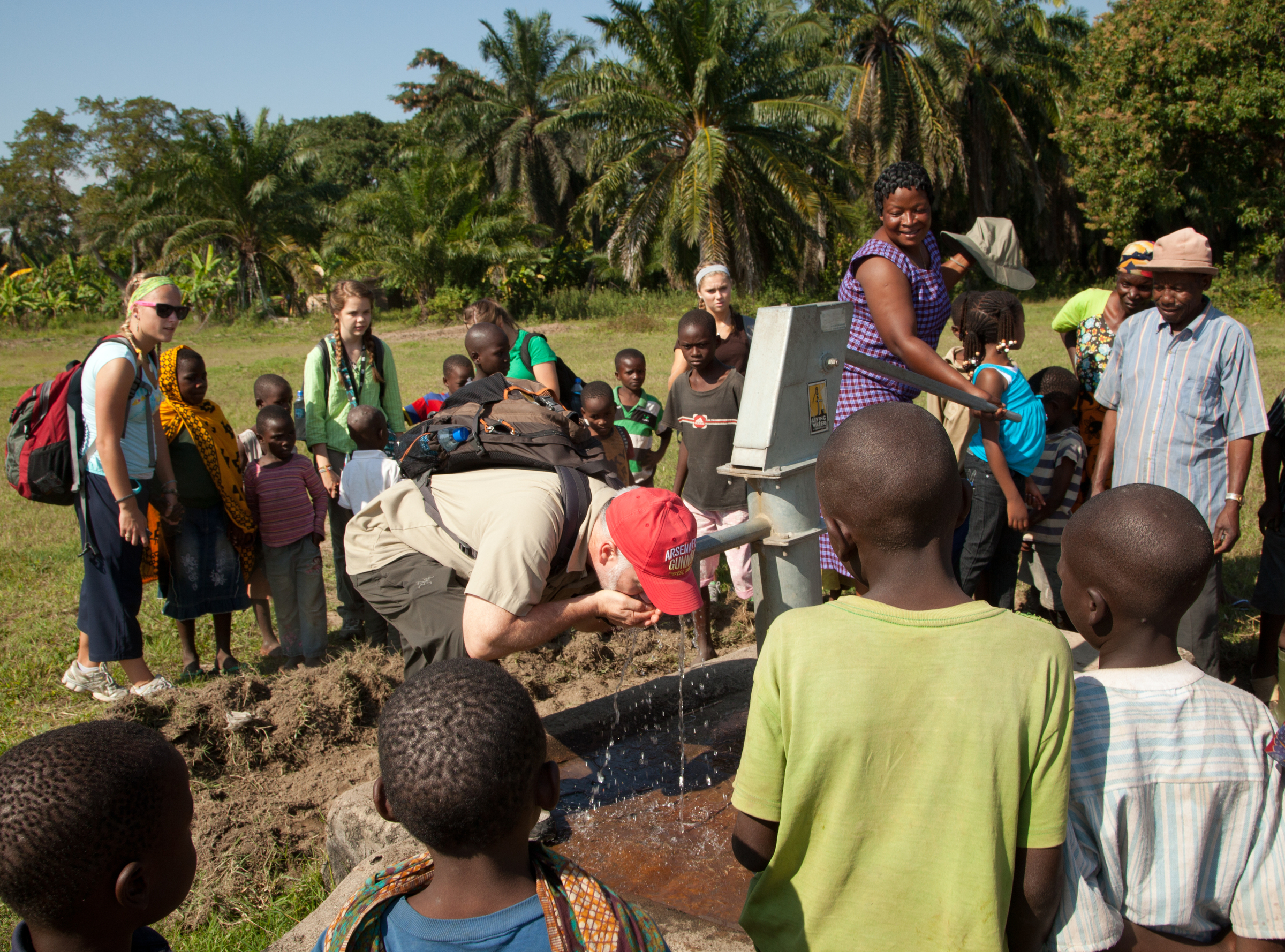
Our little 14 person chocolate factory is sustainably feeding lunch to almost 2,000 children a day in Tanzania and the Philippines with zero donations; so far over 750,000 meals funded. I have had the chance to work directly with farmers and travel to their homes and farms every year since I started this business in 2005. I drank water from a water well that we drilled in a small village in Tanzania and will never forget that moment as long as I live.
But. . . I was selfish for not considering the stress, the wear and tear, the pain that this would cause my wife Caron. In the end — she was right — “following my dream” almost destroyed our marriage.
In some ways I lost a sense of stability in my search for meaningful work. With the benefit of reflection, I respect my grandpa’s 60 plus years of farming and continuity of life even through very difficult times. I admire people who work at one place or dedicate themselves to one vocation for decades. The devout monks of the world (of all faiths) share the tradition of stability in work, in life and in faith. The monastic tradition of stability is needed for monks as a grace of perseverance and commitment in order to live out their lives. One of the things I’ve learned from Father Charles Cummings in his book Monastic Practices is that I could give any work dignity by my thought and attitude. My career does not have to define me. I can give the task dignity by what I give it not what the work gives me.
The bottom line is that if the Ghost of Chocolate Future had swept me out of my bed in the middle of the night and hovered over all of the scenes of stress, the challenges (read my post of Direct Trade), tears, money, and pain that would transpire then I would not have taken the chocolate path. I would have doubled up on my Lexapro and continued my law career. However, I am grateful that the Ghost did not appear. I am where I am supposed to be on this new journey filled with joy and truly few regrets.
Just before I found this new career I had a strange but strong gut feeling that I would have the chance to experience joy on another level. Almost like walking through an imaginary door. It was not my dream to make chocolate; it was my dream to have a new path, a new inspiration, and challenge. Chocolate is the conduit that has given me two things: first, the opportunity to make something with my hands that people love from Tokyo to Stockholm, from San Francisco to New York; second, peace and personal fulfillment that surpasses what I am able to even comprehend right now.